


What is Gamification? - The Most Advanced Guide
.avif)
Updated on September 2, 2025
Gamification is the process of applying game elements to non-gaming situations to engage and motivate users better. The uses of Gamification are practically universal and can be applied in any situation or business. It can increase productivity in the workplace, encourage physical activity, boost customer retention and loyalty, and much more.
Gamification aims to inspire people to engage with content and find pleasure and fulfillment in what otherwise might be seen as mundane tasks.
Some companies tend to be untrustworthy towards gamification due to a lack of clarity about what it can do for them, how to implement it, how it benefits their customers, and what they can actually gain from it. However, when it comes to Gamification-related benefits, “the sky is the limit” is an understatement.
- Gamification has a long and rich history, with its roots dating back to the late 1800s, showcasing its potential to engage and motivate users in various contexts.
- Today, gamification is a powerful tool to boost customer engagement and retention in industries such as retail, sports betting, fintech, and iGaming.
- Elements like missions, levels, points, and badges are common in gamification strategies, providing users with a sense of progress, achievement and increased motivation.
- As technology and user interests continue to evolve, gamification will likely play an increasingly prominent role in shaping the future customer experiences.
There’s a lot of information about what Gamification is and the mechanics behind it, but if you’re thinking of incorporating it into your business or brand, you might want to learn how it came to be and how it developed through the years.
The word “Gamification” sounds like a freshly made up name (and it is), but the concept of it has its roots all the way back at the end of the 1800s.
In the following paragraphs, we will take a more in-depth look at the origins and development of Gamification, and how it became one of the most efficient marketing and customer interaction tools in history.
.jpg)
If you’re interested in other Gamification-related content, check out the links below.
Finance & Banking
- Gamification in Finance & Banking
- Gamification in Fintech Startups
- Gamification in Wealth Management
- Customer Experience Gamified Banking Solutions
- Advantage Gamified Feedback Mechanisms Online Banking
- Gamified Solutions for Enhancing eWallet Adoption
- Gamification in Fintech: Better Finances Through Play
Health & Wellness
- Gamification in E-Health Services
- Gamification Mental Health
- Gamification Ideas Health Screening Programs
Retail & Consumer Goods
- How Sephora Gamified Beauty Insider Program Succeed
- Gamification in Amazon Business Strategy
- Lego Gamification Strategy Boosting Engagement & Sales
Education & Learning
Gaming & Entertainment
- Virtual Reality: Immersive Casino Gaming Experiences
- Social Sharing: Casino Gamification Strategies
- Gamification IGaming Operators
- Esports Betting Engagement: The Complete Operator's Guide to Gen Z Players
- Predictive Gameplay Mechanics: AI That Adapts Games to Player Behavior in Real-Time
Technology & Innovation
- Microsoft Gamification Strategy Boosts Satisfaction
- Google Gamification Strategy Boosts Satisfaction
- The Role of Artificial Intelligence in Enhancing Gamification Experiences
- Neuromarketing in Casinos: How Brain Science Revolutionizes Player Engagement
Environmental & Sustainability
- Gamification Revolutionizing Sustainable Agriculture
- Gamification in Environmental Conservation
- Gamifying Sustainability
- Sustainable iGaming Practices: Environmental Responsibility in the Digital Casino Age
Hospitality & Tourism
iGaming
- Virtual Reality: Immersive Casino Gaming Experiences
- Enhancing User Interfaces in iGaming Platforms
- AI & Machine Learning in Casino Gamification
- Social Sharing: Casino Gamification Strategies
- Gamified Tutorials: iGaming Platforms
- Gamification for High Rollers in Casinos
- Gamification & Combating Fraud in Online Gambling
- Gamification Techniques for Online Poker Platforms
- Blockchain Security: iGaming Platforms
- Casino Promotion Gamification
- iGaming Loyalty Programs
- Gamification Tactics for High-Roller Online Casinos
- Gamification for iGaming: Gen Z Players
- Gamification: iGaming Operators
- Social Gamification in iGaming
- Gamification in the Modern-Day Casino
- Gamification in iGaming
- SEO: iGaming Marketing Strategies
- Specialized SEO Agency for iGaming Companies
- Marketing: iGaming Companies
- How Gamification Heightens the Thrill of Sports Betting
- Gamification Metrics: Casino User Experiences
- Casino Gamification Software
- Gamification Software: iGaming Industry
- Link Between iGaming & eGaming
- Power of Affiliates: Gambling Industry
- Unlocking the Power of Gamification in the iGaming Sector
- Online Slot Machine Gamification
- Live Casino Gamification
- Gamifying eSports Betting
- Gamification Taking Over Fantasy Sports
- Gamification in Lottery
- Virtual Reality & Gamification
- Gamification in Bingo
- Gamification Strategies for Casino Operators
- Role of Gamification in Online Casinos
- Gamification: Land-Based Casinos
- Successful iGaming Affiliate Programs
- Engaging iGaming Landing Pages
- Impact of Blockchain Technology on iGaming
- Psychology of Slot Machine Gamification
- The Ultimate Guide to iGaming Expos, Conferences, and Events for 2026
- AI Gamification CRM: From Rules to Reinforcement
- Responsible iGaming AI: How Technology is Making Online Casinos Safer
Blockchain
- Blockchain Security: iGaming Platforms
- Impact of Blockchain Technology on iGaming
- Blockchain & Gamification: Fortifying Trust in iGaming
CRM
- CRM Gamification Boost Sales Productivity
- CRM Management Services
- Gamification CRM Adoption Rates
- Gamification in CRM
- iGaming CRM
- Gamified CRM for Live-Dealer Casinos: Real-Time Table Events
- The Unstoppable Force: How Gamification CRM Ignites Loyalty, Retention, and Revenue
Main countries:
Argentina
Australia
Austria
Brazil
Bulgaria
Cambodia
Canada
Estonia
France
Germany
India
Indonesia
Ireland
Israel
Italy
Malaysia
Malta
Mexico
Montenegro
Netherlands
Pakistan
Poland
Portugal
Russia
Singapore
Slovakia
Slovenia
Spain
Switzerland
United Kingdom
USA
{{cta-banner}}
The History of Gamification
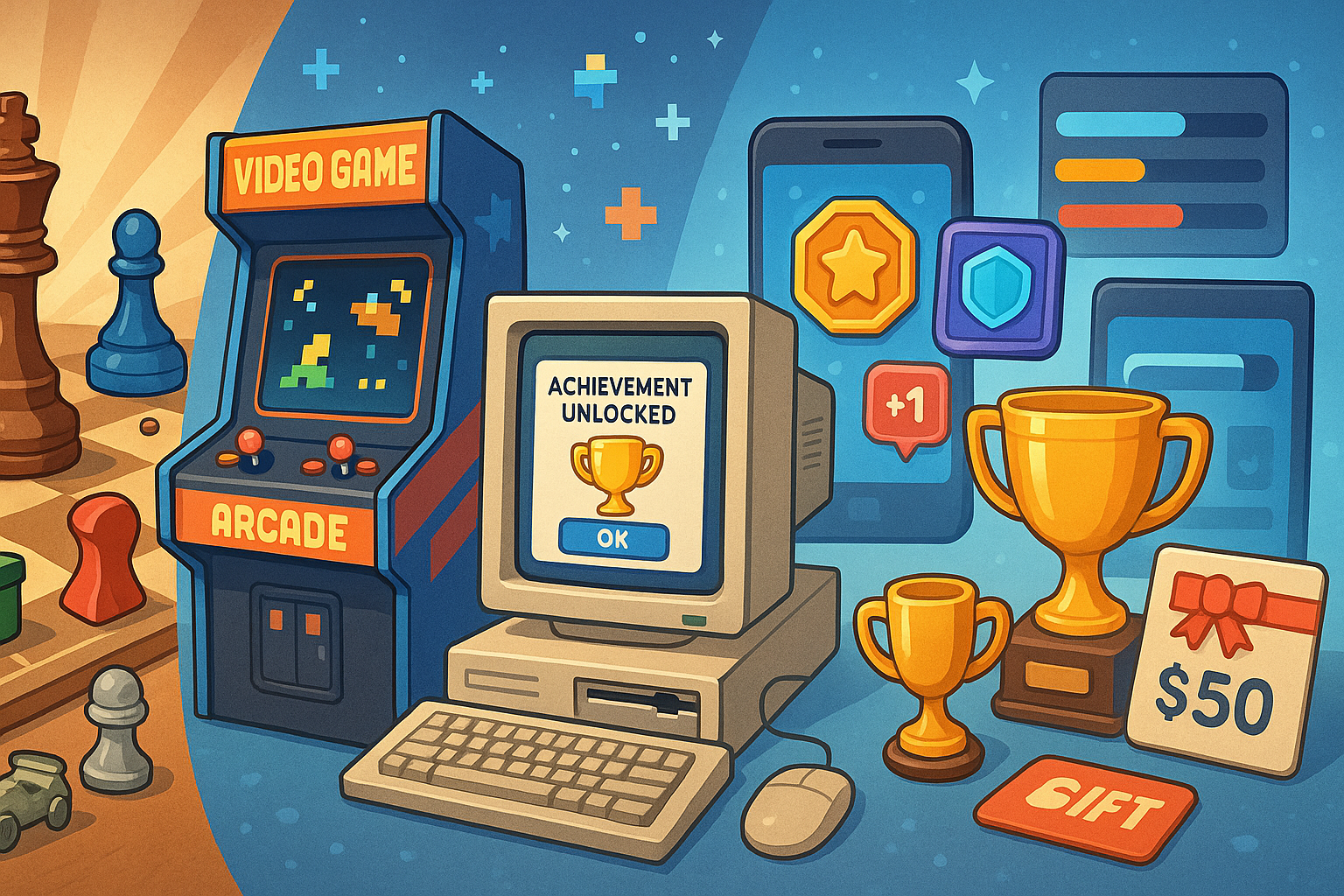
Here’s a comprehensive timeline of Gamification’s history:
1896 S&H Green Stamps
Sales people sell stamps to retailers who use them to reward loyal customers.
1908 – The Boy Scouts
The Boy Scout movement hands out achievement-based badges to their members. Kids can earn special badges if they became proficient in an activity, tightly follow the rules of the
organization, and show skills that set them apart from the rest.
1912 – American Cracker Jack
The popcorn brand American Cracker Jack starts including free gifts in every bag – a smart approach that ends up becoming extremely popular in the food industry.
1973 – The acknowledgement of the ability of games to engage employees
In 1973, The Game of Work was created by Charles A Coonradt to address the issues surrounding job productivity and engagement. Coonradt was of the mind that the fun element found in games might solve the issue with employee engagement, adding that productivity was at a low point.
1978 – The birth of MUD1 – the first multi-user dungeon game
MUD1 uses a text-based interface to ignite the fire that would eventually leads to the boom of online social gaming. It was created by Richard Bartle, an acclaimed game designer and researcher at the University of Essex in England.
1980 – Thomas W. Malone publishes a paper on how kids can learn from playing video games
Professor Thomas W. Malone from the Sloan School of Business in MIT, writes a ground-breaking paper titled “What Makes Things Fun to Learn, A Study of Intrinsically Motivating Computer Games”, in which he details how children are able to learn valuable big and small life lessons from playing video games.
1981 – Gamification becomes airborne
American Airlines creates the first frequent flier program in history. It was called AAdvantage and helped boost customer loyalty by offering rewards for common civility. This is also something that can be seen today in many popular coffee shops.
1983 – The Launching Of The First Hotel Loyalty Programs
The Holiday Inn and Marriott introduce the first hotel loyalty program simultaneously in November that year.
1983 – The first car rental rewards program
The first car rental rewards program was launched by National Car Rental.
1996 – MUD1 creator Richard Bartle strikes again
The creator of MUD1 publishes his paper “Who Plays MID1”, and makes a convincing case on categorizing how gamers make their choices when playing the game. The model would later become the basis of various gamification strategies.
1999 – Fun is taken seriously
The world starts to understand the power and potential of making mundane activities ‘fun’. Stephen W. Draper wrote a piece in which he argued that user satisfaction should be a priority for all software configurations.
.jpg)
2002 – Birth of the term “Gamification”
Computer programmer and investigative writer Nick Pelling creates the term Gamification. This is also the year when the Serious Games Initiative (SGI) is established to play a key role in developing various training games for the United States military. The SGI was determined to bring about a number of policy education, exploration, and management tools while using high-end computer game designs, tech, and development skills.
2005 – The creation of Bunchball
Rajat Pahari introduces a state-of-the-art Gamification platform designed to drive user engagement on websites by incorporating game mechanics into them. He named it “Bunchball”.
2007 – The creation of the Chore Wars website
Kevan Davis created Chore Wars, a website that made it easier for people to do chores by turning them into fun games.
2008 – Gamification becomes a recognized term, PlayStation introduces trophies
In an article where he talks about his experience at the 2008 Gaming Summit, Bret Terrill used the term “Gamification” (although it was misspelled in the article) for the first time on record:
“In conversations, one of the biggest topics … is the gamification of the web. The basic idea is taking game mechanics and applying to other web properties to increase engagement.”
Also in 2008, Sony started to reward players with achievement trophies on the PlayStation 3 video game console.
2010 – Gamification takes the world by storm
Thanks to the power of the internet, people’s curiosity about Gamification was increasing by the day. One event that helped massively boost its popularity was a series of videos from the DICE conference, which went viral in no time.
2011 – The first Gamification summit in history
San Francisco holds the first annual Gamification summit, bringing in recognized leaders and innovators in the field.
2012 – A new estimate reveals that more than 70% of Global 2000 Companies will incorporate at least one Gamified app by the year 2014
The finding was made by technological research and consulting firm, Gartner.
Also, a book that came out the same year “Reality is Broken by Jane McGonigal” revealed that 61% of CEOs, CFOs, and other senior executives that were surveyed said they were taking gaming breaks while on the job. Half of them confessed doing so to feel more productive.
2013 – A tasty market increase projection
M2 Research - a renown market analysis company - estimates that the world market for Gamification will rise from $242 million in 2012 to $2.8 billion in 2016.
2014 – 9 out of 10 companies reveal newfound success through Gamification
LevelEleven’s report also found that 71% of those companies boosted their sales performance significantly, thanks to Gamification.
2015 – Employee training revolutionized
Gartner estimates in Forbes, that Gamification tightly focused on employees has surpassed customer-focused Gamification apps in corporations worldwide. This is a historical moment for Gamification as businesses start applying Gamification in recruitment and onboarding strategies, as well as in learning and development.
2016 – Pokemon Go takes the world by storm
Pokemon became a massive hit worldwide as soon as it was released and it is still one of the most popular game-based learning apps, crossing 1 billion downloads in 2019.
Also in 2016, Snapchat introduces Streaks, making its users happy with a unique gaming feature.
2017 – Jason Suriano releases Office Arcade
Jason Suriano publishes Office Arcade, a book which explores the benefits of Gamification as a way to drive up an HR department's results by Gamifying worker engagement, training, and talent development in the corporate world.
2018 – The Gamification industry reaches new heights
In 2018, the market value for Gamification went up to $5.5 billion, which means it almost doubled in a span of just two years since 2016.
2022 – Gamification is everywhere
Today, most apps include some form of Gamification, and it is no longer just found on elearning and keep-fit apps but also in iGaming, meditation, to-do lists, job applications, presidential elections, litter picking, wildlife spotting, food and beverage… and so on. Basically, if it exists, it can be Gamified!
It’s also not as easy to spot Gamification in our day and age because there’s just so much of it everywhere.
And it’s here to stay.
As the timeline shows, Gamification has gone through some exciting and world-changing stages in history, and it’s growing stronger and more beneficial by the year. Gamification has been recognized as an extremely potent engagement too, and software designers who don’t employ it into their programs are becoming an endangered species.
Gamification has the unique power to produce change in daily habits and catapult businesses to unexpected heights, with its applications being virtually limitless.
And if all of the above didn’t convince you that Gamification is something worth investing in, we’re not sure what could :)
The Thriving State Of Gamification
.jpg)
The ever-evolving landscape of Gamification has seen a massive expansion in the last few years, and not even the lockdowns were able to shake its foothold. With alluring perks such as monetary benefits, leveled rewards, leaderboards, and exciting individual and team vs team competitions, Gamification tools and techniques drive extreme engagement and are creating a revolution within many industries all across the globe.
For example, online casinos have captured the hearts and minds of many of today’s players. Their convenience is unchallenged and they offer a massive variety of games, which makes them irresistible to many.
And with its highly advanced and ever-evolving techniques, Gamification is likely the most powerful tool that any industry implement to boost engagement and make sure players and users come back for more. This is also known as customer retention.
Needless to say, some verticals are more profitable than others, and in the following chapters we’ll briefly cover some of industries that can make the most profit by embracing the power of Gamification.
Retail
Retail businesses use all sorts of engagement techniques and incentives to reach out to their customers, lift up brand awareness, and boost sales.
From exciting games to interactive puzzles, loyalty programs, and adventure-driven digital experiences, retail is likely one of the most successful industries when it comes to driving business growth to exceptional levels.
Retail marketers use Gamification as one of their key tools to drive up sales. For example, Toys’ R’ Us uses digital QR codes to boost online sales and turn regular store visitors into virtual ones. Once the customer collects a certain number of QR codes, they can redeem them for vouchers and special discounts.
Sports
Gamification plays an immense role in the world of sports and its importance is set to rise even further in the near future. No surprise there, since games and sports are, in many ways, intertwined. Adding gaming elements to sports, naturally adds value to both fans and actual athletes.
Gamification can be used in sports to increase customer engagement and retention in both active (the game is part of a real-life activity) and non-active ways (playing a game on a mobile device or computer, or placing bets on your favorite sports teams).
Sports Gamification truly does wonders to motivate users into staying active within sports circles and boosts people’s overall dedication to sport-related activities.
Fintech
Making financial services engaging is not an easy task due to their complicated and serious nature. However, more and more businesses are boosting customer engagement through digital offers, and fintech is slowly, but surely, joining the party.
Gamification helps financial businesses engage customers with ease and turn mundane tasks into joyful and rewarding experiences. Companies do this by encouraging users to set in-app goals and by offering rewards upon task completion. Here, the Gamification process is centered around helping people save up, learn vital management skills, and improve their personal finances.
iGaming
Gamification and verticals like online casinos and sports betting go hand in hand, but many businesses are unaware of how potent of a tool it can actually be when it comes to retaining players.
iGaming businesses utilize Gamification to ensure repeat visits, provide special rewards to customers, for loyalty and retention purposes, and to train people how to use a specific platform or product.
Gamification Tools of Gold
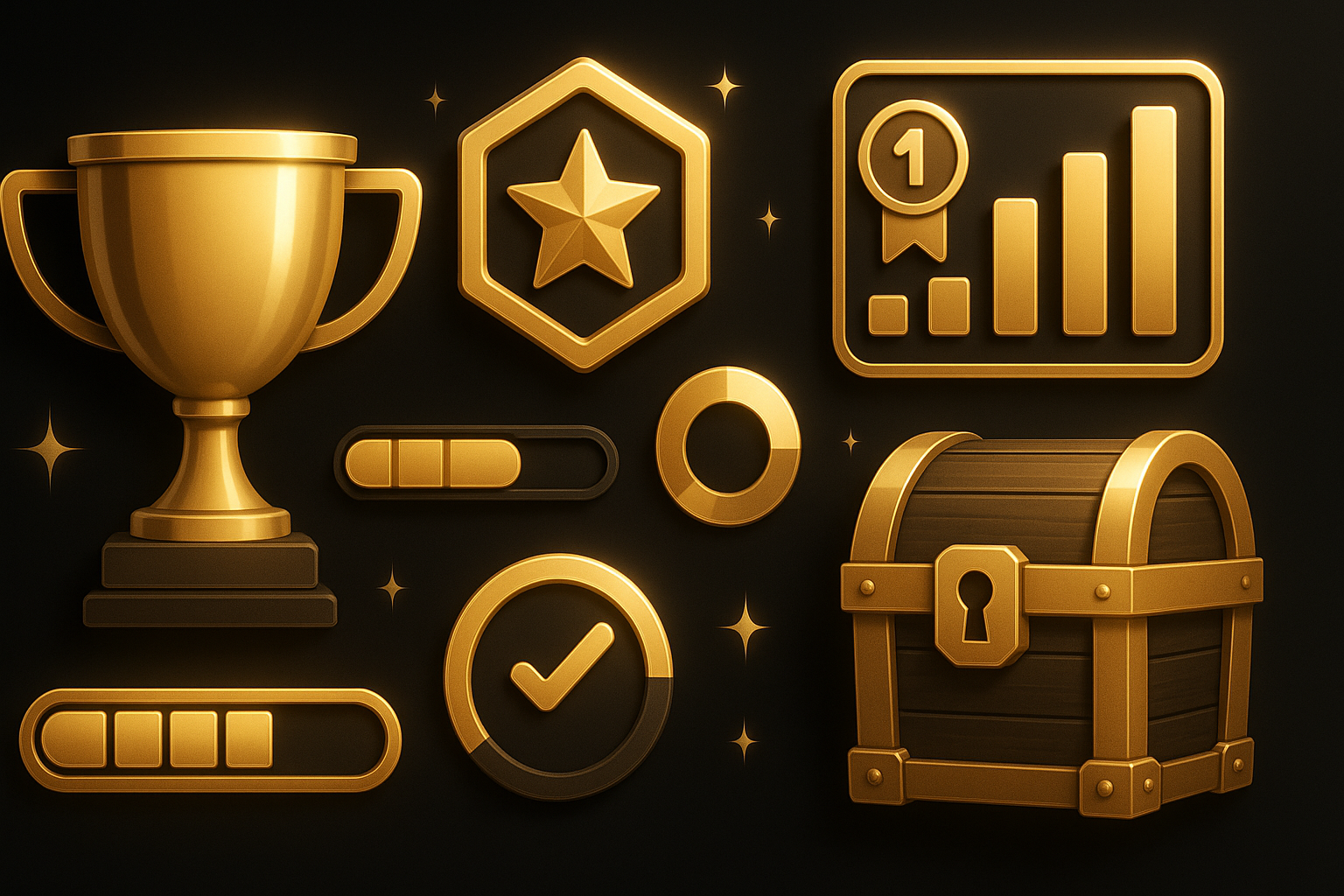
The key tools of Gamification in the iGaming sphere include:
- Missions: Players earn points by performing specific actions and completing story-driven actions and quests.
- Levels: Levels are the markers of progress for players throughout their adventure. When a player successfully completes a given quest, they can unlock various gifts and rewards.
- Points & Badges: Players are rewarded special points and badges upon completing difficult tasks and for progressing in the story.
- Store: Stores are virtual areas where players can purchase game-related items with the points they’ve earned throughout the game.
- Tournaments: Players can participate in individual or team-based tournaments to compete for a top spot on the leaderboard and earn rewards in the process.
As well as iGaming CRMs...
Lottery and Gamification are natural allies. Pretty much all lottery-related activities are structured in a game-like manner. For example:
- Buy 3 tickets - get 2 for free.
- Guess the secret number to win the grand prize.
In the world of lottery gaming, the more you bet - the more you increase your chances of becoming a wealthy man or woman, and sort out your money woes once and for all.
Advanced Gamification Design Frameworks
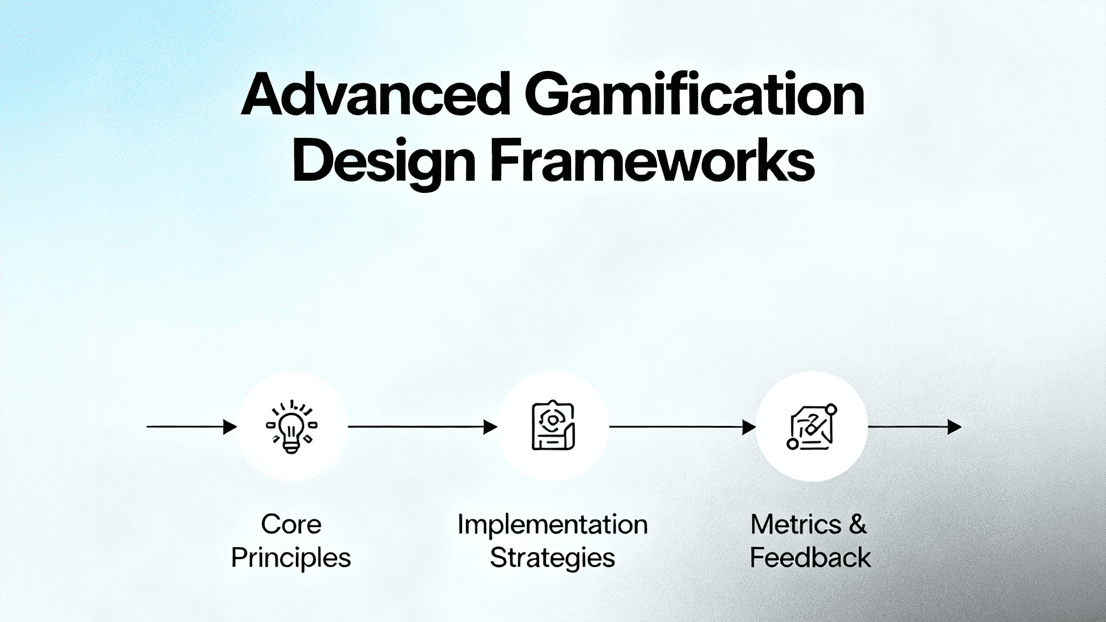
Designing effective gamified experiences requires a structured approach. Several established frameworks guide practitioners from business objectives to fun, engaging mechanics. The four most widely adopted frameworks are the 6D Framework, the Octalysis Framework, the MDA Framework, and the Player Journey Model. Understanding and applying these models ensures that gamification aligns with strategic goals, meets user needs, and delivers sustainable engagement.
1. The 6D Framework (Werbach & Hunter)
Developed by Kevin Werbach and Dan Hunter, the 6D Framework provides a step-by-step methodology for gamification projects:
- Define Business Objectives
- Identify specific outcomes (e.g., increase retention, boost sales, improve training completion)
- Align with organizational goals and key performance indicators (KPIs)
- Identify specific outcomes (e.g., increase retention, boost sales, improve training completion)
- Delineate Target Behaviors
- Determine the precise user actions that drive business objectives (e.g., daily logins, purchase frequency, course completions)
- Prioritize behaviors based on impact and feasibility
- Determine the precise user actions that drive business objectives (e.g., daily logins, purchase frequency, course completions)
- Describe Your Players
- Conduct user research and persona development
- Identify motivations, pain points, and player types
- Map user journeys to understand context and friction points
- Conduct user research and persona development
- Devise Activity Loops
- Design core loops: trigger → activity → feedback → reward
- Incorporate progression mechanics (levels, experience) and variability (random rewards)
- Design core loops: trigger → activity → feedback → reward
- Don’t Forget the Fun
- Ensure challenges deliver flow experiences by balancing difficulty and skill
- Add narrative, themes, and aesthetics to enhance emotional engagement
- Ensure challenges deliver flow experiences by balancing difficulty and skill
- Deploy Appropriate Tools
- Select technology platforms, analytics, and integration approaches
- Plan implementation roadmap, resources, and timeline
- Select technology platforms, analytics, and integration approaches
Why It Works: The 6D Framework ties every design decision back to core objectives and user research, preventing common pitfalls like reward misalignment or vague goals.
2. Octalysis Framework (Yu-kai Chou)
The Octalysis Framework breaks down gamification into 8 Core Drives that motivate behavior:
- Epic Meaning & Calling
- Feeling part of something greater (e.g., humanitarian missions, brand purpose)
- Feeling part of something greater (e.g., humanitarian missions, brand purpose)
- Development & Accomplishment
- Progress mechanics (levels, badges, points) that signal mastery
- Progress mechanics (levels, badges, points) that signal mastery
- Empowerment of Creativity & Feedback
- Open-ended challenges allowing self-expression; immediate feedback loops
- Open-ended challenges allowing self-expression; immediate feedback loops
- Ownership & Possession
- Accumulating virtual goods, custom avatars, point economies
- Accumulating virtual goods, custom avatars, point economies
- Social Influence & Relatedness
- Competition, mentorship, social sharing, cooperation
- Competition, mentorship, social sharing, cooperation
- Scarcity & Impatience
- Limited offers, cooldown timers, exclusive rewards
- Limited offers, cooldown timers, exclusive rewards
- Unpredictability & Curiosity
- Random rewards, surprise events, Easter eggs
- Random rewards, surprise events, Easter eggs
- Loss & Avoidance
- Streak freezes, diminishing points if inactive, fear of missing out
Application: Evaluate each game element against these drives to ensure balanced engagement. For example, leaderboards leverage Social Influence, while daily streaks use Loss & Avoidance. Overemphasis on black-hat drives (7 & 8) can create anxiety; combining them with white-hat drives (1–5) fosters healthy engagement.
3. MDA Framework (Mechanics, Dynamics, Aesthetics)
Originating from game design research, the MDA Framework views gamification through three interconnected perspectives:
- Mechanics: The rules, data models, and components (points, badges, levels)
- Dynamics: The interactive behavior arising from mechanics when users engage (competition, cooperation)
- Aesthetics: The emotional responses elicited (challenge, fellowship, discovery)
Design Process:
- Define desired Aesthetics (e.g., players feel competent, social, curious)
- Design Mechanics that drive those emotional responses
- Simulate and observe Dynamics to refine mechanics
4. Player Journey Model
A holistic model that maps user engagement across three phases:
- Onboarding
- Initial introduction to mechanics and narrative
- Lightweight tasks and quick wins to hook users
- Initial introduction to mechanics and narrative
- Engagement
- Core loops driving habitual behavior
- Social features and progression milestones
- Core loops driving habitual behavior
- Mastery & Advocacy
- Advanced challenges and tiered status systems
- Encouraging peer mentorship and content creation
- Advanced challenges and tiered status systems
Key Considerations:
- Seamless transitions between phases
- Progressive complexity and narrative depth
- Continuous feedback and meta rewards (prestige systems, cosmetic unlocks)
Step-by-Step Gamification Implementation Roadmap

A structured roadmap transforms complex gamification projects into manageable phases. Follow these eight phases to ensure strategic alignment, user-centric design, and data-driven optimization.
Phase 1: Define Objectives & KPIs (Weeks 1–2)
- Clarify Business Goals: Increase retention, boost sales, enhance learning outcomes
- Select Key Behaviors: Daily logins, feature adoption, purchase frequency
- Map KPIs: DAU/MAU ratio, churn rate, conversion rate, completion rate
- Baseline Metrics: Collect pre-launch data for comparison
Phase 2: Understand Your Audience (Weeks 2–4)
- User Research: Surveys, interviews, analytics review
- Persona Development: Demographics, motivations, pain points
- Player Type Assessment: Bartle and HEXAD frameworks
- Journey Mapping: Identify friction points and motivational opportunities
Phase 3: Choose Your Framework (Weeks 4–5)
- Evaluate 6D, Octalysis, MDA frameworks based on objectives and audience
- Select Primary Framework: Document justification
- Customize Framework: Tailor core drives, loops, and feedback mechanisms
Phase 4: Design Game Mechanics (Weeks 5–8)
- Mechanic Selection Matrix: Points, badges, leaderboards, quests, narrative
- Prototype Core Loops: Anticipation → Activity → Feedback → Reward
- Balance Reward Ratio: Ensure effort-to-reward alignment
- UX/UI Mockups: Wireframes showing progression and feedback
Phase 5: Select Technology Stack (Weeks 8–10)
- Platform Evaluation: Off-the-shelf vs custom
- Integration Plan: APIs, data pipelines, authentication
- Scalability Assessment: User load, feature expansion
- Budget & Resources: Licensing, development, analytics tools
Phase 6: Pilot & User Testing (Weeks 10–12)
- Pilot Deployment: Select representative user segment
- A/B Testing: Test mechanics variants for engagement impact
- Collect Feedback: Usability, motivation, reward value
- Iterate Quickly: Refine loops, reward schedules, difficulty levels
Phase 7: Full Launch & Communication (Weeks 12–14)
- Launch Campaign: Internal training, marketing promotion
- Onboarding Tutorials: Interactive guides, tooltips
- Support Materials: FAQs, help center articles
- Community Engagement: Webinars, in-app announcements
Phase 8: Monitor & Continuous Improvement (Ongoing)
- Dashboard Setup: Real-time tracking of KPIs
- Cohort Analysis: Retention, engagement by user segment
- Funnel Metrics: Drop-off points in progression
- A/B Testing Cadence: Test new mechanics monthly
- Content Refresh: Seasonal events, new challenges
- Executive Reporting: Quarterly ROI updates and roadmap adjustments
Pitfalls & Mitigations:
- Misaligned Objectives: Review alignment quarterly
- Poor Onboarding: Simplify initial tasks, add guided tours
- Overcomplex Mechanics: Conduct cognitive load testing
- Reward Saturation: Introduce novel rewards and narrative depth
- Data Blind Spots: Ensure instrumentation covers all loops.
Industry-Specific Gamification Implementation Guides
While core gamification principles apply broadly, each industry has unique challenges and opportunities. Below are detailed guides for the six most gamified sectors:
A. iGaming & Online Casinos
Key Objectives: Increase player retention, boost betting frequency, enhance VIP engagement
Mechanics & Strategies:
- Loyalty Tiers & VIP Programs: Multi-level status with exclusive benefits, cashback, personalized offers
- Tournament Systems: Leaderboards for slot leaderboards, sports betting brackets, timed challenges
- Achievement Systems: Milestone badges for total bets, win streaks, jackpot hits
- Social Features: Chat rooms, guilds/clans, shared achievements
- Progressive Jackpots & Mystery Boxes: Uncertain rewards fueling compulsion loops
- Compliance & Fairness: Transparent odds, responsible gaming thresholds, burnout prevention
- Smartico Applications: Real-time event triggers, omnichannel notifications, CRM integration for personalized campaigns
Measurable Outcomes:
- 22-30% retention lift
- 15-20% increase in average bets per session
- 25% increase in VIP deposit frequency
B. Healthcare & Wellness
Key Objectives: Improve patient adherence, boost healthy behaviors, reduce readmissions
Mechanics & Strategies:
- Medication Adherence Tracking: Points for on-time pill logging, streak systems for dosage compliance
- Fitness Challenges: Step count competitions, virtual races, avatar progression tied to achievements
- Behavioral Nudges: Triggered reminders, social sharing of milestones, community support groups
- Clinical Trial Engagement: Badge incentives for survey completions, enrollment milestones
- Mental Health Apps: Mood-tracking quests, coping skill levels, social support leaderboards
- Data Privacy & Compliance: HIPAA/GDPR adherence, anonymized analytics
Measurable Outcomes:
- 15-20% improvement in medication adherence
- 30% increase in patient portal logins
- 10-15% reduction in hospital readmissions
C. Retail & E-commerce
Key Objectives: Boost repeat purchases, increase average order value, enhance brand loyalty
Mechanics & Strategies:
- Points for Purchases & Engagement: Social shares, product reviews, referrals
- Tiered Loyalty Programs: Silver/Gold/Platinum status with exclusive discounts, early access
- Spin-to-Win & Scratch Cards: Web pop-ups rewarding discount codes
- Shopping Quests: Bundled purchase challenges unlocking free shipping or coupons
- Mobile App Gamification: Location-based challenges, in-app check-ins at physical stores
- AR Try-On Experiences: Virtual mirrors as gamified exploration
Measurable Outcomes:
- 22-30% retention lift (loyalty gamification)
- 12-15% increase in cart size
- 20% uplift in referral-driven orders
D. Education & Corporate Training
Key Objectives: Increase course completion, boost knowledge retention, accelerate skill mastery
Mechanics & Strategies:
- Mission-Based Learning Paths: Structured modules with clear objectives
- Digital Badges & Certificates: Shareable credentials for professional profiles
- Team Challenges & Hackathons: Collaborative assignments with leaderboard scoring
- Progress Tracking Dashboards: Visual timelines and milestone celebrations
- Microlearning Quizzes: Short, frequent assessments with instant feedback
- Integration with LMS: Seamless gamification layer on existing platforms
Measurable Outcomes:
- 226% increase in course completion (IBM badges)
- 47% increase in returning learners (Deloitte Academy)
- 30-40% improvement in knowledge retention
E. Finance & Banking
Key Objectives: Improve financial literacy, increase savings rates, drive digital adoption
Mechanics & Strategies:
- Savings Goal Challenges: Visual progress bars for savings targets
- Spending & Budget Quests: Points for sticking to budgets, completing financial tasks
- Investment Simulations: Virtual portfolios with rewards for learning modules
- Referral & Social Sharing Incentives: Reward codes for bringing friends onboard
- Compliance & Security Gamification: Acknowledge users for completing 2FA, privacy modules
Measurable Outcomes:
- 15-25% increase in savings goal achievement
- 30% boost in adoption of budgeting tools
- Enhanced customer satisfaction and NPS
F. SaaS & Technology
Key Objectives: Drive feature adoption, increase trial-to-paid conversions, reduce churn
Mechanics & Strategies:
- Onboarding Quests: Step-by-step guides awarding points for completing setup tasks
- Feature Discovery Badges: Rewards for using advanced features
- Community Leaderboards: Top contributors recognized for forum participation
- Usage Streaks: Encourage daily logins to maintain streaks and earn rewards
- Feedback & Bug Bounty Rewards: Points for submitting valuable feedback or bug reports
- Integration Incentives: Bonus points for connecting third-party tools
Measurable Outcomes:
- 20-30% increase in feature adoption rates
- 15-20% lift in trial-to-paid conversion
- 10-15% reduction in churn rate
5 Powerful Gamification Success Stories That Actually Work

Here are five real-world examples of gamification that delivered genuine business results across different industries, including proven cases from iGaming.
1. Starbucks Rewards: The Coffee Giant's $2 Billion Achievement
Starbucks transformed coffee buying into a game with their rewards program, and the numbers tell the whole story. With over 75 million global members, loyalty customers now drive 57% of all U.S. sales. Members spend three times more per visit than regular customers and visit stores more frequently, creating an incredible ripple effect for the brand.
The program works through a simple star-collection system where every purchase earns points toward free drinks and food. But the real magic happens in the details: personalized challenges, tier-based rewards (Green and Gold levels), and mobile integration that lets customers order ahead and skip lines. The result? Starbucks holds over $22 billion in prepaid customer funds on cards and apps, essentially operating like a bank while building unshakeable customer loyalty. The mobile-first approach means 71% of app users visit stores at least weekly, proving that convenience combined with rewards creates lasting habits.
2. Duolingo: Making Language Learning Addictive
Duolingo cracked the code on education gamification, turning one of the most challenging personal goals into something people actually enjoy. With over 500 million users worldwide, the app proves that learning can be genuinely fun when you add the right game elements.
The secret lies in their comprehensive approach: daily streak counters that track consecutive learning days (6 million users maintain streaks of seven days or longer), XP points for completing lessons, competitive leaderboards that group users into weekly leagues, and achievement badges for hitting specific milestones. After introducing their badge system, in-app purchases jumped 13% and friend connections increased by 116%. The psychology works because learners get immediate feedback and constant validation, making each lesson feel like winning a small game rather than struggling through homework.
3. Nike Run Club: Building a 100-Million-Strong Community
Nike turned solo running into a social experience with their Run Club app, attracting over 100 million users who now spend three times more than regular Nike customers. The app combines GPS tracking with social challenges, achievement badges, and personalized coaching plans that adapt to individual progress.
The gamification elements include custom goal setting, time-limited group challenges, virtual high-fives from other runners, and milestone celebrations that users share on social media. This creates what marketers call "retention hooks" - built-in features that bring inactive users back to the app while encouraging active users to stay engaged. The community aspect transforms running from a lonely activity into a shared adventure, with runners comparing progress, joining global challenges, and celebrating achievements together.
4. bet365: Free-to-Play Games Drive Real Revenue
One of the world's largest online operators partnered with Incentive Games to add free-to-play gamification elements that significantly boost player engagement and retention. The collaboration focuses on custom-built games that don't require real money to play but keep users active on the platform during quieter periods.
These gamification tools delivered measurable results: 50% better week-on-week customer retention, 22% reduction in player acquisition costs, and in some cases, a complete 100% boost to customer lifetime value. The strategy works because free-to-play elements keep users engaged between real money sessions, building habits and familiarity with the platform. Players earn points, compete on leaderboards, and unlock achievements through gameplay, creating emotional investment that translates into longer-term loyalty and higher spending when they do place real bets.
{{cta-banner}}
5. Betsson Group: Casino Gamification Powers Record Growth
Betsson Group leveraged comprehensive gamification across their online casino operations to achieve record-breaking performance in 2023, with casino revenue reaching €672 million for the full year - a substantial increase driven partly by enhanced player engagement features.
The group implemented mission-based challenges, tiered loyalty programs, competitive tournaments, and personalized reward systems across their casino platforms. These gamification elements contributed to higher player retention and increased session times, with mobile casino gaming generating €157.8 million in Q4 2023 alone. The success demonstrates how traditional casino games become more engaging when wrapped in achievement systems, social leaderboards, and progression mechanics that give players goals beyond just winning money. By making the overall casino experience more interactive and rewarding, Betsson created stronger emotional connections with players while building sustainable long-term growth.
10 Best Gamification Software / Apps / Platforms
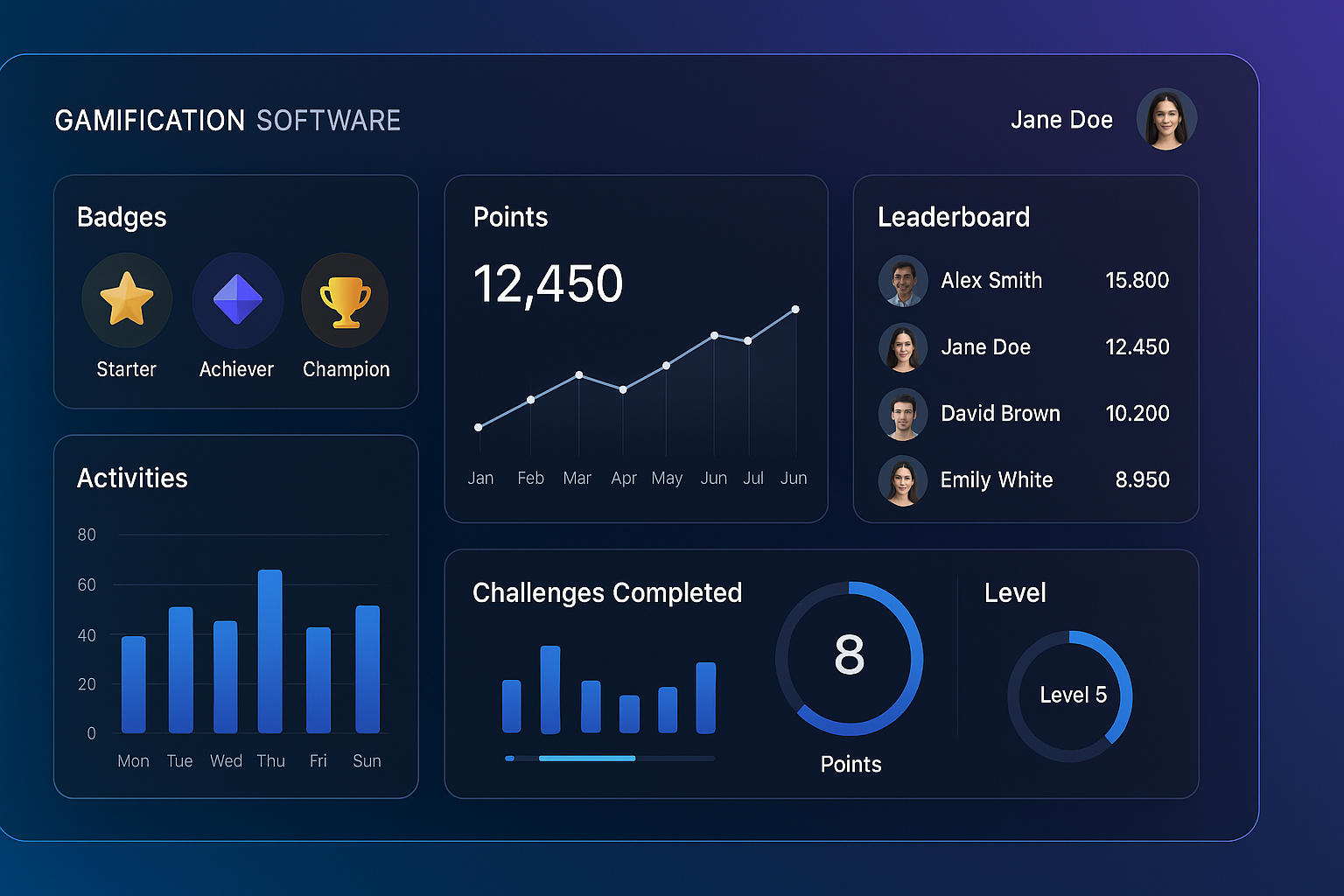
Here are the top 10 most powerful Gamification solutions across industries.
10. CompetitionLabs
CompetitionLabs gives any iGaming business the tools to make playing more fun with real-time tournaments, missions, challenges, and jackpots, built into one simple platform. The software lets operators create special games and rewards on the fly, use live leaderboards, and segment players easily for personalized experiences. Everything updates in real time, so players get immediate feedback, not “wait and see” surprises.
With dynamic segmentation, each user can follow a journey unique to their style, thanks to the platform’s ability to group and target people automatically. Operators can localize every aspect, from languages to reward types, making it work smoothly in any market. Automation is front and center, so once set up, most features run by themselves – great for busy teams.
Security is a focus too. InfoSec teams get what they need, and the system is designed to scale with growing portfolios. CompetitionLabs supports a variety of products, including tournaments, instant wins, jackpots, which are all crafted to boost player engagement, keep users coming back, and make management easy.
9. Antavo

Antavo makes it easy for businesses to build and run customer loyalty programs powered by AI. Everything starts with its Promotion Engine and Planner, helping teams scope out loyalty concepts quickly on a simple whiteboard. The Loyalty Engine then handles all the points, rewards, and user journeys, customized to fit any brand or market. Antavo’s platform is flexible; workflows are drag-and-drop and don’t require coding, so new campaigns come to life without hassle.
With Antavo, managing and scaling loyalty programs is no problem. The software supports multi-brand, multi-country, and omnichannel features, handling high volumes and fast data processing. Integration is smooth, thanks to an API-first approach, so it works well with CRMs, activity trackers, and marketing tech. Reporting, insights, and automation tools help optimize programs and measure results. Plus, Antavo’s AI assistant, Timi AI, gives hands-on help for faster planning and smarter decisions.
Regular product updates and strong industry partnerships mean Antavo stays ahead of customer loyalty trends, making the platform practical, powerful, and ready for any business size.
8. Drimify
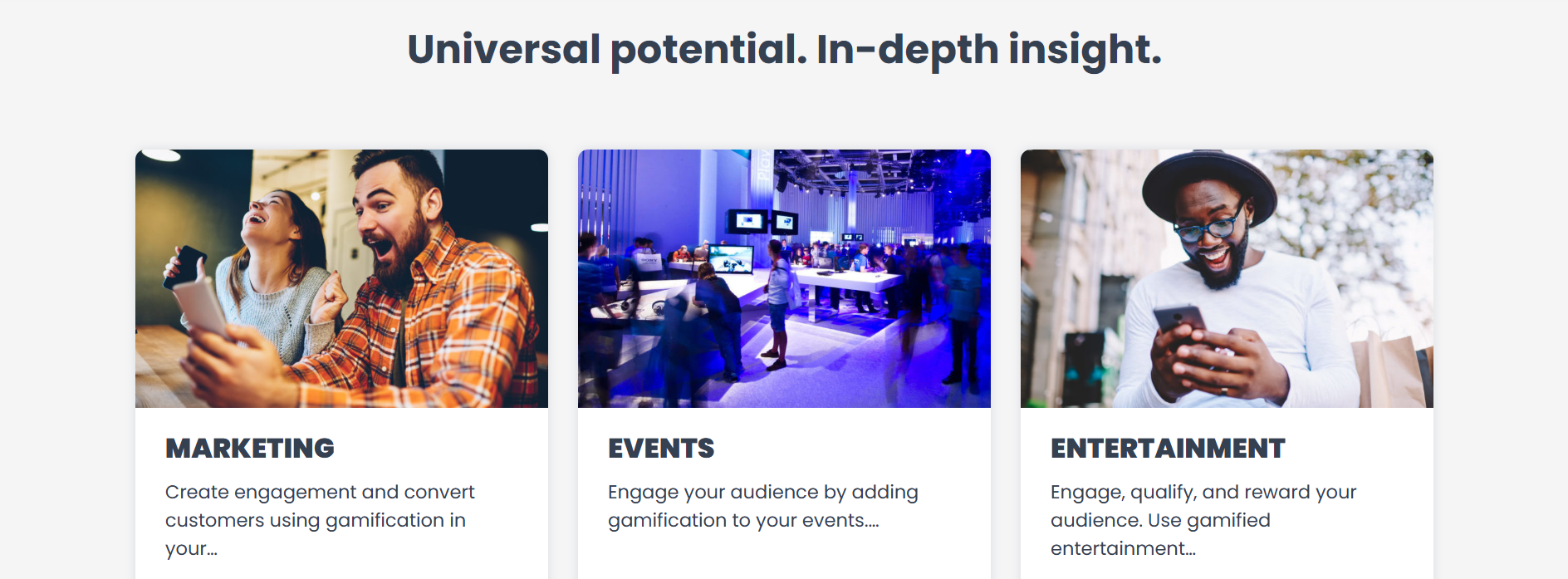
Drimify makes it easy for anyone to add gamification—like quizzes, games, instant wins, or interactive journeys—to their marketing, events, HR, or training efforts. The platform is simple: pick a game or experience, add your content, customize your style, and launch it anywhere you want, from websites to social media or even QR codes. It works on any device and supports over 30 languages, opening up global options.
You can set up popular game formats (like scratch cards or arcade games) or build unique game scenarios with Dynamic Path™, combining videos, images, and quizzes for a richer experience. Drimify lets you track engagements and export all your data, so you know instantly how well your campaigns work. With powerful graphics customization and white label options, it’s easy to match your brand.
The interface is user-friendly—even beginners can launch campaigns in minutes—and everything runs securely via fast HTML5 tech. Drimify supports unlimited projects year-round, so you can keep campaigns fresh. Expert help is there if you want it, making Drimify flexible for everyone from solo marketers to big teams.
7. Funifier Studio
Funifier is all about boosting engagement for any audience through easy-to-use gamification tools. You can create custom experiences, including sales challenges, employee games, etc., that fit your goals and brand. The platform makes it simple: connect your app once, then adjust strategies and content without touching any code. AI-powered features and beautiful templates help you launch new projects quickly, even if you’re not a designer.
Funifier works across industries, whether for boosting sales, improving employee productivity, or increasing customer adoption. It’s packed with widgets, strategies, and ready-made game content, so you don’t have to build from scratch. Real-world results include more sales, higher efficiency, reduced attrition, and bigger customer communities.
Pricing is flexible, with options for consumer apps, employee programs, events, and even discounts for non-profits. Case studies share how brands saw real improvements—like huge jumps in sales and engagement. If you want gamification that adapts to your needs and scales with your business, Funifier is designed to make it fun, fast, and effective.
6. Spinify
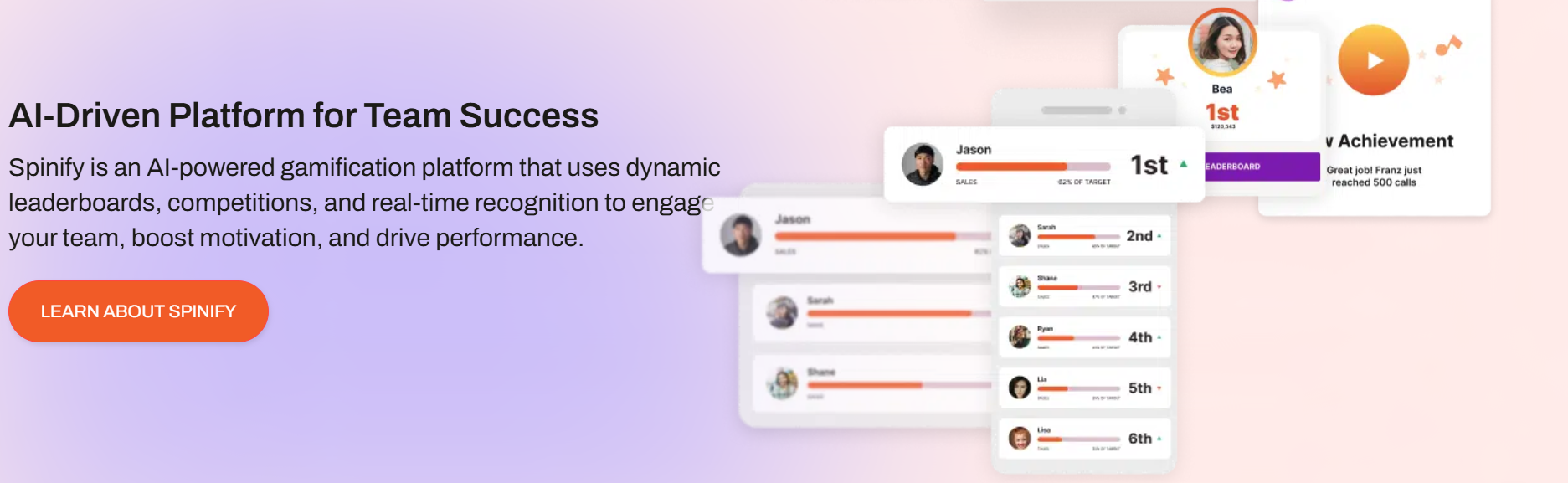
Spinify takes the best parts of teamwork (e.g. real-time recognition, friendly competition) and builds them into an easy-to-use platform. With AI-powered leaderboards, dynamic contests, and instant feedback, Spinify motivates teams and keeps everyone focused on their goals. The platform helps celebrate every win, big or small, so team members feel appreciated and energized.
Setting up Spinify is simple. It connects easily to the software your team already uses, and lets you create custom games and rewards to match your company’s style. Managers save time with Spinify’s AI coach, which gives personalized, actionable feedback to every team member, boosting productivity and supporting individual growth, without endless meetings.
So, whether you want to boost sales, track progress, or improve morale, Spinify drives results with tailored competitions and clear, visible achievements. Teams stay engaged, agents hit their KPIs, and everyone can see how they measure up. With Spinify, work feels more like a game, which makes it easier for teams to smash targets and celebrate success together every day.
5. Gametize

Gametize is a simple, AI-powered platform designed to make work and learning more engaging. It lets you create all kinds of challenges, such as photo quests, quizzes, predictions, and even QR code scans, that keep everyone involved and entertained. With leaderboard competitions, achievements, and a reward store, players stay motivated and get recognized for every milestone.
The platform is flexible: use it for team engagement, better customer connections, hiring, onboarding, or compliance training. New hires enjoy an interactive journey right from the start, and ongoing training becomes more fun and memorable. Employees can give feedback, track progress, and stay in the loop with constant updates.
What sets Gametize apart is its intuitive design. No steep learning curves, no complicated setups, just easy-to-use tools that anyone can manage. You can build a community where players interact, share, and support each other, adding a social touch to every experience. Whether you’re building a vibrant team culture or adding excitement to marketing, Gametize helps turn everyday tasks into something everyone looks forward to.
4. Bunchball Nitro

BI WORLDWIDE makes gamification straightforward and effective for businesses wanting better engagement. The platform adds playful elements, such as missions, scores, and rewards, into everyday systems such as websites, training tools, CRMs, and apps, motivating people to join in, learn, and stick around. It’s built to boost performance across sales, training, customer support, and more.
With BI WORLDWIDE’s tools, teams get instant feedback, recognition, and a sense of accomplishment. Solutions work for remote or in-office employees, making collaboration more active and keeping activity going in online communities. Their Bunchball Nitro software is secure and easy to use, engaging users right where they already work.
Integration is simple, branding is flexible, and the platform supports fast launches with smart AI features. You can motivate partners, train channel teams, and encourage customers to be loyal, all with measurable results. Consulting experts help map goals and strategies for each business, making sure the gamification matches what your teams or clients need. It’s a fun way to drive real growth and keep everyone moving in the right direction.
3. Mambo.io
Mambo makes in-app gamification easy for both developers and product managers, letting you boost engagement with points, badges, levels, and rewards. Its powerful API is quick to integrate, so you can launch new engagement strategies in days – not months – and keep your team focused on building great app experiences.
The platform is flexible and customizable, working in the cloud or on-premise, so it fits smoothly into your existing systems. No matter the industry or audience, Mambo supports millions of users and is designed for high performance, handling thousands of requests per second with minimal delay.
Mambo is built for real-world needs: product managers get tools to shape a standout user experience, while developers enjoy easy documentation and reliable functionality. Frequent updates ensure your gamification features keep getting better, and strong support means help is always available.
Global brands rely on Mambo to drive motivation, recognition, and productivity. With real-time feedback and seamless integration, teams and customers stay engaged, connected, and loyal.
2. Centrical
Centrical puts everything your team needs to grow and stay motivated in one easy-to-use platform. With AI-guided feedback, personalized coaching, and real-time performance tracking, everyone knows exactly how they're doing and where they can improve. Gamification tools like competitions, leaderboards, and instant rewards make work more interactive and fun, motivating your team to aim higher every day.
Microlearning is another highlight: bite-sized lessons, quizzes, and training activities are delivered to the right people at the right time, keeping skills sharp without overwhelming anyone. Team leaders get smart recommendations from Centrical’s AI, saving time on analysis and letting them focus on helping their team succeed.
The platform works for any frontline team, including contact centers, sales, learning and development, and more. Centrical helps boost customer satisfaction, drive sales, and improve employee learning and engagement. Easy to set up and packed with useful features, it’s a smart pick for companies looking to turn performance and learning into something everyone enjoys and values.
1. Smartico.ai – the First and Leading Unified Gamification/CRM Automation System on the Market
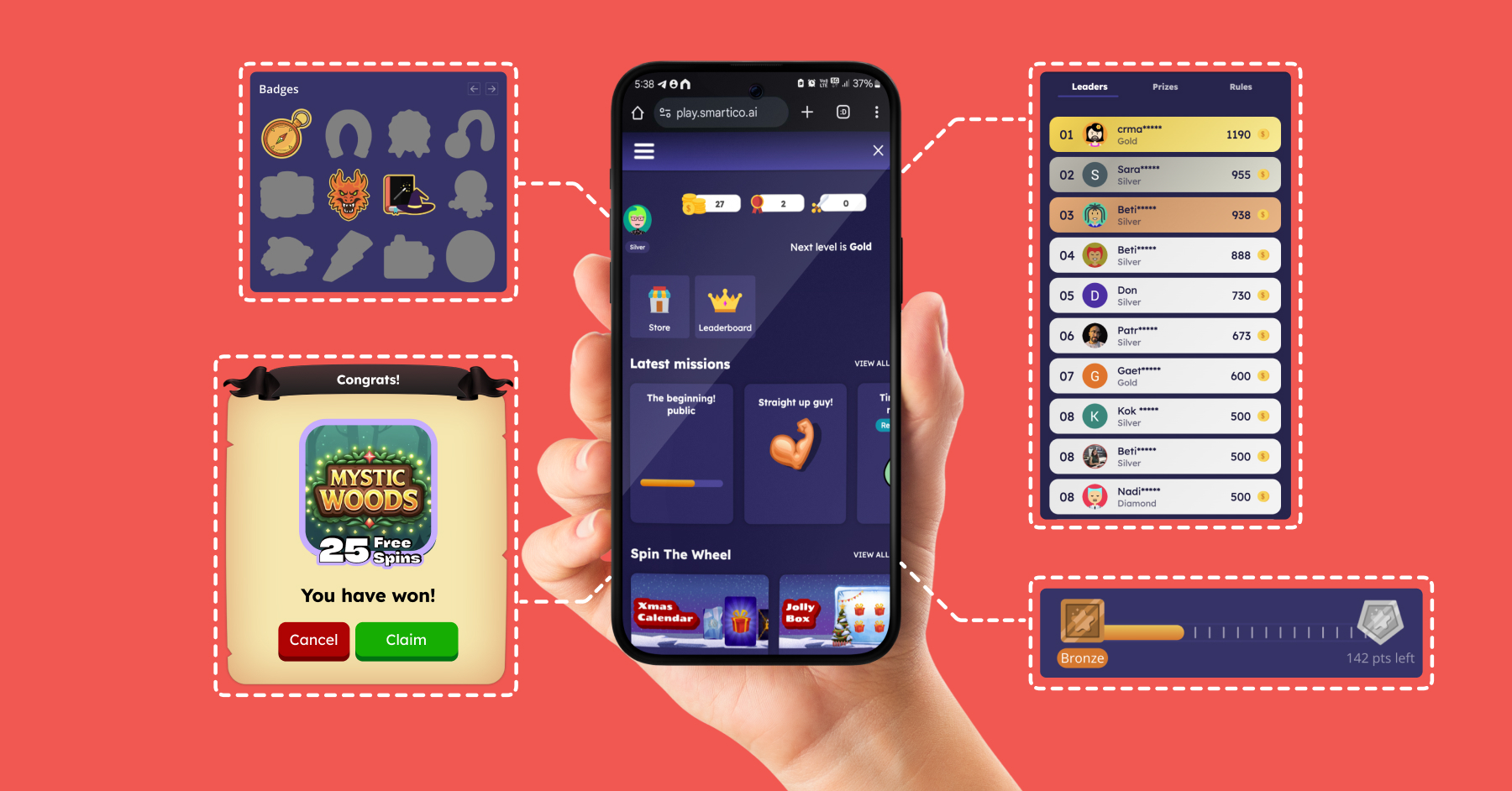
In order for the integration and maintenance to be successful and fit right in with your goals and purposes, you will need more than just an ordinary Gamification provider. This is where Smartico can prove immensely valuable to you.
Smartico’s intelligent Gamification suite offers a 3-point system to provide real-time gaming experiences that are dynamically segmented to match with the profiles of your customers.
The 3-point system goes as follows:
- Set emotional and intellectual goals that appeal to your players.
- Offer Rewards that engage and motivate your players to keep playing.
- Place Gamification at the center of the player experience by creating recurring themes and reinforcing player routines.
“Our strategy is to engage with personalized content and relevant information at the right time (and not to over engage) – this is a real boost in customer experience.”
– Sergey Kobitskiy, Smartico Co-Founder & CTO
Smartico’s Key Features
In order to increase engagement with users and earn their loyalty as long-time customers, Smartico provides a large set of powerful features, which include:
- Various intuitive challenges and gaming techniques
- High value incentives that encourage long-term loyalty and retention, elevate player value, strengthen engagement, and boost user acquisition
- Multi-Currency/Language/Deep Brand Support
- Missions – Engage players with fun real-time solo or multiplayer tasks
- Points – Encourage players to keep coming back through point-based incentives and unlockables
- Badges – Stand out from the rest with sleek badges and earn free spins/bonuses for each earned badge
- Levels – Players gain experience and special perks when leveling-up
- Incentives – Motivate players to come back for more with unique rewards and bonuses
- Marketplace – Players can actualize their points by cashing them in for free spins or other rewards like online shopping vouchers
- Mini Games – Players can reset their senses through short, reward-earning games like our Loyalty Wheel and Scratch & Catch
- Tournaments – Set your own qualification rules and offer your customers a powerful endorphin rush with Smartico’s special tournament system
- Leaderboards – Set daily, weekly, and monthly prizes and watch your user engagement skyrocket
- Bonus Engine Integration - Cash bonuses, free spins, match bonuses and more
The great thing about Gamification is that you can always find something that works for your business needs and apply it. It is an extremely powerful tool when used the right way, whether it be in sports betting, online casinos, lottery, retail, fintech or anything else, and even better when used in conjunction with bonus systems.
The benefits are virtually limitless, and with a strong partner such as Smartico by your side, you can seamlessly create strategies that produce never-before-seen results.
If you want to know more about how Gamification can boost the revenue of your business, please don’t hesitate to get in touch and book a free demo of Smartico’s all-in-one Gamification solution.
- Learn about best techniques to implement gamification in iGaming
- Understand the applications of gamification in CRM and customer retention
- Discover how gamification is influencing finance and banking sectors
- Explore gamification in marketing strategies for businesses
- Dive into the world of bingo gamification and its unique engagement techniques
- Check out the leading gamification trends shaping the future of various industries
- Read about the top gamification books to deepen your knowledge on the topic
- Learn how live casino gamification enhances user experiences
- Discover how gamification is utilized in social media to drive engagement and growth
- Explore the implementation of gamification in SaaS products for increased motivation and usage
- Understand the role of gamification in call centers for employee motivation and performance
- Dive into the world of online slot machine gamification for more engaging and fun gaming experiences
- Explore how gamification is influencing customer behavior modeling and shaping user interactions with brands and products
- Discover the power of free-to-play mini-games in driving user engagement and revenue growth
- Learn more about game-based learning and the benefits it offers within various industries and educational settings
- Check out how gamification is being applied in Singapore and driving innovative customer experiences
- Gain insights on CRM automation and how it can be enhanced through gamification
- Explore the affiliate system and the role of gamification in boosting sales and customer loyalty
- Discover how companies are utilizing gamification in their marketing journey to build brand awareness and increase sales
- Learn about best iGaming CRM practices and how gamification can be a game-changer for customer retention and satisfaction
Gamification FAQ - Beyond the Basics
What's really happening in your brain when gamification works?
Your brain releases dopamine, a "feel-good" chemical, every time you complete a task or get a reward. This creates a natural habit loop that keeps you coming back for more. It's the same reason checking your phone feels satisfying - your brain is getting tiny rewards that make you want to repeat the behavior.
Think of it like training a pet, but you're training yourself. Each point, badge, or level-up gives your brain a little celebration that says "do this again!"
Why do some people hate gamification while others love it?
People have different motivation styles. Some thrive on competition and leaderboards, while others prefer collaboration or personal achievement. Age, culture, and personality all play a role.
Introverts might feel stressed by public leaderboards, while extroverts love the social recognition. Some people also see through gamification and feel manipulated, which kills the fun entirely.
What psychological tricks make gamification so powerful?
Beyond dopamine, gamification taps into several deep psychological needs:
- Autonomy: Feeling in control of your choices
- Competence: Getting better at something
- Relatedness: Connecting with others
- Progress: Seeing yourself move forward
- Achievement: Reaching meaningful goals
The best gamification makes you feel like you're progressing on your own terms, not being pushed around.
How do you measure if gamification actually works?
Look at behavior change, not just engagement. Key metrics include:
- Retention rates: Do people keep coming back after the initial excitement?
- Task completion: Are people actually finishing what they start?
- Quality of work: Is the output getting better or just faster?
- Long-term engagement: Does it still work after 3-6 months?
- User satisfaction: Do people genuinely enjoy the experience?
Don't just count points earned - measure if people are truly changing their habits.
What are the biggest mistakes companies make with gamification?
Focusing on rewards instead of results. Adding points to a broken system doesn't fix the system - it just makes it more annoying.
One-size-fits-all design. Not everyone is motivated by competition. Some prefer collaboration, personal challenges, or learning-focused experiences.
Making it too complex. If people need a manual to understand your game mechanics, you've already lost them.
Short-term thinking. Real behavior change takes time. Quick gamification sprints rarely create lasting habits.
Can gamification become addictive or manipulative?
Yes, and this raises serious ethical concerns. "Dark patterns" in gamification can exploit psychological vulnerabilities:
- Time manipulation: Making it hard to stop playing
- Social pressure: Using friend comparisons to guilt people into engagement
- Financial exploitation: Pay-to-win mechanics that prey on competitive instincts
- FOMO tactics: Limited-time offers that create false urgency
Ethical gamification should enhance user autonomy, not undermine it. If people feel tricked or manipulated afterward, it's crossed the line.
How is AI changing the future of gamification?
AI is making gamification smarter and more personal. Instead of generic point systems, AI can:
- Adapt in real-time: Change difficulty based on your performance
- Personalize experiences: Give different people different types of challenges
- Predict behavior: Intervene before someone gets bored or frustrated
- Generate content: Create new challenges automatically
This means gamification will feel less like a system and more like a personal coach.
What role will virtual and augmented reality play?
VR and AR are making gamification more immersive. Instead of clicking buttons on a screen, you might:
- Walk through virtual training environments
- See progress bars and achievements floating in your real workspace
- Compete with colleagues in mixed-reality challenges
- Practice skills in safe, gamified simulations
The line between "game" and "reality" is blurring, making experiences more engaging and memorable.
How is blockchain changing gamification rewards?
Blockchain lets people truly own their digital rewards. Instead of points that disappear if you switch platforms, you could have:
- NFT achievements: Badges you can show off anywhere
- Cross-platform rewards: Points that work across different apps
- Real economic value: In-game items that have actual market worth
- Decentralized competition: Tournaments not controlled by a single company
This makes rewards feel more meaningful and permanent.
What industries will see the biggest gamification growth?
- Healthcare and wellness: Making medication adherence and exercise more engaging
- Corporate training: Replacing boring compliance courses with interactive experiences
- Financial services: Helping people save money and understand complex products
- Education: Making learning more interactive and personalized
Retail and e-commerce: Creating shopping experiences that feel like games
Basically, any industry dealing with behavior change or engagement challenges.
How do you avoid gamification fatigue?
Keep evolving the experience. Add new challenges, change reward structures, and introduce fresh mechanics regularly.
Focus on intrinsic motivation. Help people find personal meaning in activities, not just external rewards.
Give people control. Let them choose their own goals, pace, and types of challenges.
Make it optional. Some people will never want gamification, and that's okay.
What's the difference between good and bad gamification?
Good gamification: Helps you achieve goals you already have, feels empowering, respects your time and autonomy, creates genuine enjoyment.
Bad gamification: Manipulates you into behaviors that serve the company more than you, feels patronizing or childish, wastes your time, creates anxiety or compulsion.
The key question: "Does this help me become who I want to be, or does it just help them get what they want from me?"
How do cultural differences affect gamification?
Western cultures often prefer individual competition and achievement, while many Asian cultures favor group harmony and collective success. Some cultures value long-term planning, others prefer immediate rewards.
What works in Silicon Valley might fail completely in other parts of the world. Always test with your actual audience.
Is there a "right" age to start using gamification?
Gamification works across all ages, but the approach needs to change:
- Kids: Need simpler mechanics and more immediate rewards
- Teens: Respond well to social elements and status
- Adults: Prefer meaningful progress toward real goals
- Seniors: Value clear feedback and avoid overwhelming complexity
The key is matching the complexity to the user's comfort level with technology and games.
What happens when everyone starts using gamification?
We might see "gamification fatigue" as people get overwhelmed by points and badges everywhere. The novelty will wear off, and only well-designed, meaningful experiences will survive.
This will likely lead to more subtle, sophisticated approaches that feel less "game-like" but still tap into human motivation psychology.
Final Words
Gamification is more than just adding game elements – it touches deep psychological needs like progress, autonomy, and connection. Its real power lies in helping people achieve meaningful goals, not just triggering habits.
As new tech like AI and VR makes experiences even more engaging, it's important to use gamification ethically and focus on real benefits for users. When done right, it can make everyday activities more enjoyable and support personal growth.
Did you find this article helpful? If so, why not share it with like-minded professionals like yourself?
Want to find out how our event triggered campaigns can raise your customer engagement through the roof? Contact one of our experts for a free demo.