


Gamification in iGaming: What You Need to Know to Stay on Top in 2026

Ever since its inception in 1908, when the Boy Scouts started awarding kids with badges to recognize their achievements, Gamification has turned around millions of businesses worldwide, providing exponential growth via retention, loyalty, engagement, and simply, pure fun.
In the iGaming sphere, Gamification is the integration of game-like elements into online casinos and betting platforms. It drives user engagement, retention, and revenue growth by tapping into human psychology – competition, rewards, and progression.
As 2026 unfolds, gamification is presenting new technologies. AI, blockchain, and social sharing, for example, are reshaping the iGaming experience like never before.
In this article, we’ll take a deeper look at the ins and outs of Gamification and what it can do to help your iGaming company evolve beyond Boy Scout level and get closer to reaching its full potential.
Let’s jump right in!
Gamification Defined

Gamification refers to the integration of game elements (such as points, rewards, leaderboards, and challenges) into usually non-gaming environments to make mundane tasks more engaging and enjoyable. The concept takes advantage of human psychology, especially our natural love for competition, achievement, and rewards.
Core Components of Gamification
Gamification is built on several key mechanics. These include:
- Points & Scores: Players earn points for completing tasks or reaching milestones.
- Badges & Achievements: Symbolic rewards for accomplishments that recognize progress.
- Leaderboards: Ranking systems that encourage competition and drive performance.
- Challenges & Quests: Structured goals that provide motivation and a sense of adventure.
- Rewards & Incentives: Tangible or intangible benefits for engagement and loyalty.
- Feedback & Progress Tracking: Real-time updates on performance to enhance motivation.
The Core Psychology: Why Gamification Actually Works for iGaming Players

Ever wonder why gamification is so effective? It goes way deeper than just handing out rewards. The real power comes from touching basic psychological drives that shape how people behave and make decisions.
Intrinsic vs. Extrinsic Motivation: The Core Framework
Players are motivated in two completely different ways, and the best gamification strategies use both.
Intrinsic motivation comes from within. Players engage because the activity itself feels rewarding. In iGaming, these internal drivers include:
Mastery: Players want to get better and see real progress. When someone climbs from Bronze to Silver tier, they're not just collecting a badge. They're proving they've grown. This drive to master a system keeps players coming back far longer than simple rewards ever could.
Autonomy: Players need to feel like they're making real choices. Gamification works when players can pick their own path. Focus on daily missions, compete in tournaments, or stack up loyalty points for the marketplace. The second players feel pushed down one narrow path, engagement drops off.
Purpose: Players want their actions to mean something bigger. Leaderboards that reset weekly give everyone a fresh shot at competing. Seasonal campaigns with storylines give context for why collecting those points matters beyond just the prize.
Extrinsic motivation comes from outside rewards. These are the tangible perks players get for their actions:
Tangible Rewards: Bonus funds, free spins, cashback, marketplace goodies. These drive quick action but can create dependency if you overdo it.
Social Recognition: Public leaderboards, achievement badges, VIP status markers. Players care about how they look to the community.
Competitive Success: Tournament wins, ranking achievements, performance comparisons. The urge to beat other players is incredibly powerful.
The Psychology of Variable Rewards
Here's one of the most powerful psychological tricks in gamification: the variable reward schedule. This is exactly why loot boxes and prize wheels work so well.
When rewards are unpredictable, your brain releases more dopamine during the anticipation than when you get a guaranteed reward. A player spinning a loyalty wheel doesn't know if they'll score 10 free spins or 100. That uncertainty creates excitement and keeps people coming back for more.
But you need to calibrate this carefully. Make rewards too rare and players get frustrated and quit. Make them too predictable and the excitement vanishes. The sweet spot? Use a variable ratio schedule where players get meaningful rewards often enough to stay hopeful, but unpredictably enough to stay excited.
The Endowment Effect in Action
Players value rewards they've "earned" way more than identical rewards just handed to them. This is called the endowment effect, and it's why gamified systems beat simple bonus structures every time.
Look at two scenarios. In Scenario A, a player gets a $10 welcome bonus right when they sign up. In Scenario B, a player completes three daily missions over a week and "earns" a $10 reward through a scratch card they won.
The dollar amount is exactly the same. But the psychological value? Completely different. The player in Scenario B invested time and effort. They built up anticipation. They felt the satisfaction of completing challenges. That $10 they earned feels way more valuable than the $10 they were just given, even though economically it's identical.
This is why properly designed gamification systems consistently outperform traditional bonus structures when it comes to player retention and lifetime value.
The Progress Principle
Human brains are wired to finish what we start. The progress principle says that visible progress toward a goal motivates us to keep working toward that goal.
Progress bars, level systems, tiered VIP programs... they all use this principle. When a player sees they're 80% of the way to the next VIP level, the psychological pull to finish that last 20% is strong. They've already put in effort to reach 80%. Walking away now feels like losing all that progress.
The trick is making progress visible and meaningful. A progress bar that barely moves creates frustration. One that jumps too fast kills the sense of achievement. The best design creates steady forward momentum with occasional speed boosts through bonus opportunities or special events.
Why Traditional Bonuses Fail Where Gamification Succeeds
Traditional deposit bonuses and promotions don't work on non-depositors because they ask for commitment before delivering any value. They want players to take financial risk before experiencing anything good about the platform.
Gamification flips this around. It gives value first through engaging mechanics and earned rewards. By the time a gamified system asks players to deposit, it's already shown them what it's worth. The player has experienced smooth gameplay, collected rewards, and gotten comfortable with the platform.
This upfront value exchange is why gamification consistently converts non-depositors at higher rates than bonus-only approaches. It's not about how big the incentive is. It's about when and how you deliver that value.
Gamification ROI: Real Operator Results and Industry Benchmarks
.avif)
Talk is cheap. Let's look at what gamification actually delivers when it's implemented properly.
Across the iGaming industry, operators who deploy structured gamification systems consistently see measurable improvements in the metrics that matter most. These aren't theoretical projections. They're patterns that show up again and again across operators of different sizes, in different markets, running different product verticals.
Retention Impact
Retention is where gamification earns its keep. The average iGaming operator without gamification sees 30-day retention rates between 20-30%. Operators running well-designed gamification systems push that to 40-55%. That's not a marginal improvement. It's a structural shift in how many players stick around long enough to build real lifetime value.
The 90-day numbers are even more telling. Without gamification, most operators retain 10-18% of players past three months. With gamification, that number jumps to 25-38%. The compounding effect of keeping players engaged week after week is where the real revenue impact lives.
Why? Because gamification creates multiple touchpoints that pull players back. A player who only has deposit bonuses as a reason to return will lapse the moment they lose interest. A player who has active missions, a leaderboard position to defend, and 400 loyalty points sitting in their account has three separate reasons to log in tomorrow.
Deposit Behavior Changes
Gamified platforms consistently see 20-35% higher average monthly deposits per active player compared to non-gamified platforms. This isn't because gamification pressures players to deposit more per session. It's because gamification extends the active lifespan of players, meaning they deposit over more months.
First-time deposit conversion rates tell a similar story. Operators relying on traditional welcome bonuses convert registered users at 2-4%. Operators using gamified onboarding flows (daily wheels, free scratch cards, achievement-based rewards that don't require deposits) convert at 5-9%. The difference comes from trust-building. By the time a gamified system asks for a deposit, the player has already had multiple positive experiences with the platform.
Cost Efficiency
One of the most overlooked benefits of gamification is what it does to bonus costs. Traditional bonus structures are expensive because they give away value upfront with no guarantee of return. A $50 welcome bonus costs $50 whether the player stays for one day or one year.
Gamified reward systems distribute value over time, tied to player actions. A player who earns a $5 reward after completing a mission cost the operator $5, but the mission itself generated engagement worth far more. Operators who shift from front-loaded bonuses to gamified reward distribution typically see 30-50% reductions in effective bonus costs per retained player.
Industry Benchmarks by Operator Size
Small operators (under 50K active players) typically see the fastest percentage gains from gamification because their baseline metrics are lower. A small operator might see retention double from 15% to 30% within 90 days of implementation.
Mid-sized operators (50K-250K active players) see the largest absolute revenue impact. They have enough players for AI personalization to work effectively, and their marketing teams are small enough that automation creates massive efficiency gains.
Large operators (250K+ active players) see the most benefit from AI-driven personalization specifically. At scale, the difference between segment-based campaigns and individual-level personalization shows up in millions of dollars of incremental revenue annually.
Gamification isn't an overnight fix. Most operators see initial engagement improvements (higher DAU, longer sessions) within the first 30 days. Retention improvements become measurable by day 60-90. Revenue impact, including higher deposits, better LTV, and lower bonus costs, typically shows up clearly by month four to six.
Operators who expect instant revenue gains in week one will be disappointed. Gamification builds value through habit formation and progressive engagement, and those take time to compound. But once they do, the numbers speak for themselves.
Real-World Applications of Gamification

Gamification is widely used across different industries, from education to marketing and workplace productivity. Let’s check out some notable examples.
1. Gamification in Education – Example: Duolingo
Duolingo, the popular language-learning app, uses streaks, XP points, and leaderboards to encourage consistent learning. This system turns studying into a game, keeping users motivated.
Benefits:
- Increases retention and long-term learning.
- Drives engagement and motivation.
- Provides instant feedback and rewards.
2. Gamification in Marketing – Example: Starbucks Rewards
Starbucks uses a loyalty program with stars, levels, and rewards to keep customers engaged. Users earn stars per purchase, unlocking free drinks, discounts, and exclusive perks.
Benefits:
- Boosts customer loyalty.
- Encourages repeat purchases.
- Creates brand engagement and excitement.
3. Gamification in Workplace Productivity – Example: Microsoft’s Productivity Score
Microsoft uses gamification in corporate training and productivity tracking. Employees receive performance badges, scores, and challenges to stay productive.
Benefits:
- Enhances employee motivation and performance.
- Creates a more engaging work environment.
- Encourages continuous skill development.
4. Gamification in Health & Fitness – Example: Fitbit & Nike+
Fitness apps like Fitbit use daily step goals, achievements, and social challenges to keep users active. Nike+ allows users to compete with friends and track progress with badges.
Benefits:
- Promotes healthy habits through motivation.
- Encourages consistency and goal setting.
- Increases adherence to fitness plans.
Gamification by Vertical: How It Works Across Slots, Sports Betting, Live Casino, and Lottery
.avif)
Gamification isn't one-size-fits-all. The mechanics that keep a slots player engaged are completely different from what works for a sports bettor or a live dealer regular. Operators who apply the same gamification playbook across every product vertical leave money on the table.
Here's how to tailor your approach.
Slots: Progression and Collection Mechanics
Slots players are already in a game mindset. They're used to spinning, waiting, and hoping. The psychology that drives slot play (variable rewards, anticipation, sensory excitement) maps perfectly onto certain gamification mechanics.
What works best for slots:
Mission chains tied to spin counts work exceptionally well. "Spin 200 times on any slot this week to unlock a mystery bonus." This creates a secondary goal layer on top of the base game, giving players a reason to keep spinning even during cold streaks.
Themed seasonal campaigns that connect specific slots to storyline progression keep content feeling fresh. "Play the Egyptian-themed slots this month to unlock Chapter 3 of the Pharaoh's Quest." This drives game discovery and cross-sells players into titles they wouldn't normally try.
Progressive achievement systems where players collect themed items across sessions (gem collections, card sets, map pieces) tap into the completion drive. Players who are 7 out of 10 pieces into a collection will come back to finish it.
Tournament formats with leaderboards based on win multipliers (not total wagered) level the playing field and create genuine competition across all bankroll sizes.
What doesn't work: Anything that requires deep strategic thinking. Slots players are in relaxation mode. Keep mechanics simple, visual, and rewarding.
Sports Betting: Prediction and Social Competition
Sports bettors are fundamentally different from casino players. They believe in their knowledge. They follow teams, study stats, and think their picks are better than the next person's. Gamification for sports betting needs to feed that sense of expertise and competition.
What works best for sports betting:
Prediction leagues where players compete on accuracy rather than stake size create massive engagement. "Pick the winners of this weekend's Premier League matches. Top 50 predictors win bonus bets." These cost almost nothing to run and generate daily engagement even on non-match days as players research their picks.
Accumulator challenges reward bold betting. "Build a 5-leg acca this weekend. If 4 out of 5 hit, we'll refund your stake as a free bet." This encourages multi-event betting, which has higher margins, while the near-miss mechanic keeps players feeling like they're close to winning big.
Social tipping competitions let players share their picks with the community and build followings based on their track record. This creates social stickiness that's incredibly hard for competitors to replicate. A player won't switch platforms if they've built a reputation and following on yours.
Pre-match engagement missions drive activity during downtime. "Watch the pre-match analysis video and answer 3 trivia questions to earn 50 loyalty points." This keeps bettors engaged between events and builds the habit of checking the platform daily.
What doesn't work: Spin-the-wheel and scratch card mechanics feel out of place for sports bettors. They see themselves as skilled decision-makers, not luck-based players. Gamification needs to respect that self-image.
Live Casino and Table Games: Streak Tracking and Social Status
Live casino players value the social atmosphere and the feeling of being at a real table. They're often more experienced, more social, and more competitive than the average slots player. Gamification here needs to enhance the live experience, not distract from it.
What works best for live casino:
Streak tracking and achievement systems that recognize play patterns. "Hit 5 blackjack hands in a single session" or "Win 3 consecutive roulette bets." These create memorable moments and give players stories to share.
Dealer interaction rewards where players earn points for engaging with live features (tipping the dealer, using chat, participating in side bets) deepen the social connection that makes live casino sticky.
VIP tournament formats exclusive to live table players. "This Saturday: €5,000 Live Blackjack Tournament, 64 players, single elimination." Tournament structures create event-driven engagement and give high-value players a reason to show up at specific times.
Session-based progression where players unlock better tables or exclusive rooms as they accumulate play time. This creates a sense of VIP progression that mirrors the velvet-rope experience of land-based casinos.
What doesn't work: Constant pop-ups and mission notifications during live play. The immersive experience is the product. Gamification should enhance that immersion, not interrupt it.
Lottery: Countdown Engagement and Syndicate Mechanics
Lottery players have the longest gaps between engagement moments. They buy a ticket, wait for a draw, check results, and maybe don't come back for days. Gamification needs to fill those gaps.
What works best for lottery:
Draw countdown engagement keeps players connected between purchases. Daily mini-games, trivia, or scratch cards that award small prizes or bonus tickets maintain daily touchpoints. "Check in daily before Saturday's draw for a free bonus entry."
Syndicate gamification turns a solitary activity into a social one. Players form groups, pool tickets, and share results. Leaderboards tracking "most successful syndicates" or "longest active syndicate" create community and accountability. A player is less likely to skip a draw if their group is counting on them.
Number-picking achievements and lucky number tracking gamify the selection process itself. "Your number 17 has appeared in 3 of the last 10 draws" creates a sense of pattern and personal connection to the game.
Seasonal jackpot campaigns with escalating prize pools tied to participation milestones. "When 100,000 tickets are sold this week, an extra €50,000 gets added to Saturday's jackpot." This creates collective momentum and a sense of community contribution.
What doesn't work: Complex multi-step mission chains. Lottery players want simplicity. Keep mechanics lightweight and tied to the anticipation cycle of upcoming draws.
The Next Evolution: Why "AI-Driven" Beats "AI-Orchestrated"

The iGaming industry is going through a major shift in how gamification systems work. Two distinct approaches have emerged: "AI-Orchestrated" gamification and "AI-Driven" gamification. Knowing the difference matters a lot if you're choosing your tech stack.
Defining the Two Approaches
AI-Orchestrated Gamification uses artificial intelligence as a recommendation engine for human decision-makers. Here's how it works:
- AI analyzes player data and suggests campaign ideas
- Marketing teams review what the AI recommends
- Humans decide which campaigns to approve and launch
- AI tracks results and provides post-campaign analysis
- The cycle repeats with new AI recommendations based on fresh data
This approach treats AI as a sophisticated analytics and suggestion tool. The human marketer stays in charge, using AI insights to guide their strategy.
AI-Driven Gamification uses artificial intelligence as an autonomous execution engine running in real-time. Here's that model:
- AI continuously analyzes individual player behavior as it happens
- AI automatically personalizes game mechanics, rewards, and messages for each player
- Changes happen instantly without human sign-off
- AI learns from every interaction and constantly refines its approach
- Humans set the big-picture goals and boundaries, but AI handles the day-to-day execution
This approach puts AI in the driver's seat of the gamification system. Human marketers set strategy and guardrails, but AI handles personalization and execution.
Why the Difference Matters: Speed and Scale
The big difference between these approaches comes down to speed and scale. AI-Orchestrated systems work in campaign cycles, typically measured in days or weeks. A marketing team might review AI recommendations Monday, approve a campaign Tuesday, launch it Wednesday, and check results the following week.
AI-Driven systems work in real-time, measured in milliseconds. When a player logs in, AI instantly evaluates their history, current situation, predicted behavior, and best next move. The player sees a personalized experience tailored to their specific profile before they've even clicked on their first game.
Here's a practical example. Two players log into a casino platform on the same day:
Player A hasn't deposited in 45 days but previously loved slot games and usually played in the evening. She's sitting on 500 loyalty points but never redeemed them.
Player B deposited three days ago, lost most of his bankroll, and is showing early churn risk signs based on his behavior (shorter sessions, no visits for 72 hours, playing fewer game types).
An AI-Orchestrated system might lump both players into a segment called "Re-engagement targets" and send the same email campaign offering a deposit bonus. A more sophisticated one might split them into "Dormant players" and "Churn risk players" with different email copy.
An AI-Driven system treats these players as individuals, not segments:
Player A sees a personalized message: "Welcome back! You have 500 points waiting. Redeem them now for 50 free spins on [her favorite slot]. Plus, complete today's mission (play 20 spins on any slot) to earn a bonus wheel spin." The system personalized the reward to her tastes, created an easy achievement to rebuild engagement, and gave a clear path to use her accumulated points.
Player B sees something totally different: "We noticed your last session was rough. Take a break and try this free scratch card (no deposit needed). If you want to play again, here's a safety net: deposit $20 and we'll add $10 insurance. If you lose it, we'll refund half." The AI spotted the churn risk, offered a no-commitment way to engage, and structured a deposit offer with loss protection to lower the psychological barrier.
The Personalization Depth Advantage
AI-Driven systems can personalize across dimensions that AI-Orchestrated systems simply can't reach at scale.
Temporal Personalization: AI-Driven systems know when each player is most likely to engage and can time push notifications, emails, or in-platform messages perfectly. Player A gets her message at 7 PM (her usual session start time), while Player B gets his at 2 PM (when he's previously responded to offers).
Contextual Personalization: AI-Driven systems adjust based on what's happening right now. If Player A logs in but sits idle for 30 seconds, the AI might trigger a subtle nudge: "Check out your new mission!" If she jumps straight into playing, the AI stays quiet and lets her enjoy herself.
Reward Personalization: AI-Driven systems dynamically calculate optimal reward values for each player based on their individual response patterns. Player A might respond to modest rewards because she's motivated by collection mechanics. Player B might need higher-value incentives because he's shown price sensitivity in his deposit history.
Progression Personalization: AI-Driven systems can adjust difficulty and pacing of progression mechanics per player. Someone who engages daily gets a steady progression curve. Someone who pops in sporadically gets accelerated progression during their active periods to keep momentum going.
The Learning Velocity Difference
AI-Orchestrated systems learn in batches. After a campaign runs for a week or two, the AI crunches aggregate results, figures out what worked, and suggests tweaks for the next campaign. Learning happens between campaigns.
AI-Driven systems learn continuously from every single interaction. Each player action feeds new data that immediately shapes how the AI treats that player and similar players. If the AI discovers that players who get scratch cards on their third consecutive login have a 23% higher deposit rate, it starts testing that pattern across relevant player segments right away, not in the next campaign cycle.
This continuous learning creates a compounding advantage. An AI-Driven system running for six months has processed millions of individual interactions and spotted nuanced patterns no human analyst could ever find. It knows, for instance, that players who spin the loyalty wheel between 6-8 PM on Thursdays are 1.7x more likely to respond to deposit offers in the next 48 hours. That's too specific and contextual for campaign-based systems to discover or act on.
The Resource Efficiency Reality
There's a common myth that AI-Driven systems need more resources than AI-Orchestrated ones. Actually, the opposite is true at scale.
AI-Orchestrated systems need serious ongoing human power. Marketing teams must constantly review AI recommendations, approve campaigns, watch performance, and adjust strategies. As the player base grows, the number of segments and campaigns multiplies, requiring bigger teams to handle the growing complexity.
AI-Driven systems need upfront strategic setup but minimal ongoing tactical management. Once the AI is trained and the strategic parameters are set (like "never offer more than $50 in weekly promo value to a player with LTV below $200"), the system runs itself. A marketing team of three can manage an AI-Driven system serving millions of players because they're setting strategy, not running tactics.
The Competitive Reality
The iGaming market is moving toward AI-Driven gamification because competition demands it. When one operator in a market deploys an AI-Driven system, they get an immediate personalization edge. Their players get more relevant offers at better times with rewards calibrated to their individual preferences.
Players notice this difference. Someone comparing two casino platforms might get generic, batch-scheduled emails from Operator A and perfectly timed, personalized rewards from Operator B. Over time, Operator B's better relevance wins player loyalty and wallet share.
Operators using AI-Orchestrated systems find themselves in a tough spot. They're competing on relevance with one hand tied behind their back, limited by how fast humans can make decisions and how much bandwidth their marketing teams have.
Making the Strategic Choice
Operators choosing between AI-Orchestrated and AI-Driven gamification should look at their business situation:
Choose AI-Orchestrated if:
- Your player base is small (under 50,000 active players) where manual campaign management still works
- Your marketing team has deep knowledge that AI hasn't learned yet
- You operate where regulations require human review of all player communications
- You're testing gamification for the first time and want hands-on control of the learning process
Choose AI-Driven if:
- Your player base is large or growing fast
- You compete in mature markets where personalization is expected
- You want to maximize marketing team efficiency and let AI handle tactical execution
- You're committed to gamification as a long-term retention strategy
- You need to operate 24/7 with consistent personalization across all time zones
The shift from AI-Orchestrated to AI-Driven gamification mirrors the broader evolution of marketing automation across industries. Just as email marketing evolved from manual sends to triggered automation to AI-powered personalization, gamification is following the same path.
Operators who embrace AI-Driven systems now get a temporary competitive edge. In three to five years, AI-Driven gamification will likely be the baseline expectation, not a differentiator. The question is whether you'll lead that shift or scramble to catch up.
Gamification and Responsible Gambling (RG): A Critical Balance
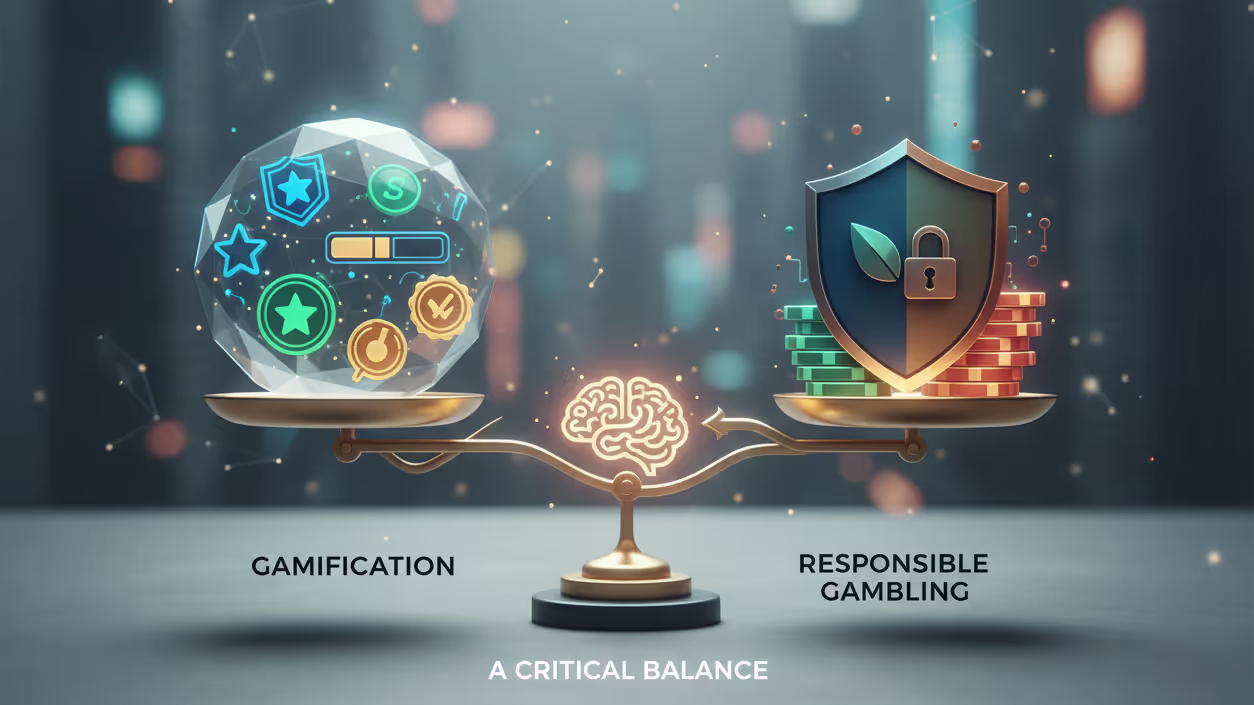
The power of gamification to drive engagement creates equal responsibility to keep that engagement healthy. As the iGaming industry adopts increasingly sophisticated gamification mechanics, responsible gambling needs to be built into these systems from day one, not tacked on later.
The Ethical Imperative
Gamification works because it taps into psychological drivers like progression, achievement, social recognition, and variable rewards. These same mechanisms that make gamification effective can also, if misused, encourage problematic gambling behavior.
An operator who uses daily missions and streak bonuses to drive engagement has built a habit formation system. That system is ethically neutral. It becomes positive or negative based on how you use it. The same mechanic that rewards a casual player for trying new games can pressure a problem gambler to play beyond their limits to keep a streak alive.
This ethical responsibility goes beyond regulatory compliance. Regulations set the floor, not the ceiling. Operators who treat responsible gambling as just a compliance checkbox miss the strategic opportunity to build trust and long-term sustainability.
Problem Behaviors Gamification Must Address
Gamification systems need to actively watch for and respond to several warning signs:
Chase Behavior: When players rapidly bump up their wagers or deposits after losses, trying to recover. This pattern often speeds up in gamified systems if players feel they're "close" to hitting a goal.
Session Duration Extension: When players consistently blow past their typical session lengths, especially during losing streaks. Progression mechanics can fuel "just one more spin" thinking that pushes sessions beyond healthy limits.
Frequency Escalation: When daily engagement turns into multiple sessions per day, particularly if players log in at odd hours (late night, early morning) outside their normal patterns.
Ignoring Financial Signals: When players keep depositing despite failed payments or declined cards. This suggests they're trying to gamble beyond their financial means.
Reward Dependency: When players only show up during promo periods or to claim gamified rewards, showing signs of becoming "bonus addicted" rather than actually enjoying the games.
Gamification Mechanics for Responsible Gambling
The same psychological principles that make gamification engaging can be redirected to promote healthy gambling behavior.
Progress Bars for Limits: Instead of only showing progress toward VIP tiers or mission completion, show players progress against self-imposed limits. A visual showing "You've used 60% of your weekly deposit limit" creates awareness without being pushy. The same progress bar that motivates tier advancement can motivate responsible limit-setting.
Achievement Badges for Healthy Play: Recognize and reward responsible behavior. Badges for "Set Your First Deposit Limit," "Took a 7-Day Break," "Played Within Your Session Limit for 30 Days," or "Completed a Responsible Gambling Self-Assessment" validate healthy habits.
Cool-Down Missions: When AI spots potential chase behavior (rapid consecutive deposits, dramatically bigger bet sizes), trigger a "Take a Break" mission. "Step away for 24 hours and we'll give you a no-strings scratch card when you return." This interrupts the chase cycle and rewards the healthy choice of taking a break.
Reality Check Integration: Instead of the standard regulatory reality check popup that players dismiss without reading, weave it into the gamification system. "You've been playing for 90 minutes. Before your next mission unlocks, take a 5-minute break." Making the reality check part of the progression system makes it feel less like an interruption and more like part of the game design.
Limit-Setting Rewards: Reward players for setting deposit limits, wager limits, or session time limits. "Set your weekly deposit limit and get 10 bonus spins." This creates positive feelings about limit-setting instead of treating it like a restriction.
Self-Exclusion Incentives: Make self-exclusion less psychologically hard by keeping certain gamification benefits active during exclusion periods. A player who self-excludes for 30 days could still build up certain loyalty points or keep their VIP tier, showing the platform supports their decision instead of punishing it.
AI-Driven Early Intervention
AI-Driven gamification systems have a unique ability to spot and step in with at-risk players before behavior becomes problematic.
Traditional responsible gambling tools are reactive. A player sets a limit, hits it, and the system blocks further play. By that point, the player has already made poor choices.
AI-Driven systems can be proactive. By analyzing behavior patterns in real-time, AI can spot early warning signs and step in before limits are reached:
A player who typically deposits $50 weekly suddenly tries a $200 deposit. Before processing it, the AI triggers: "This is 4x your usual deposit. Are you sure? Consider setting a weekly limit if you haven't already."
A player who usually plays 30-minute sessions is now in hour three of continuous play with a shrinking bankroll. The AI triggers a gentle message: "You've been playing for 3 hours. Take a break. Your next daily mission will be ready in 6 hours."
A player's betting patterns shift dramatically (from $1 spins to $10 spins in one session). The AI briefly pauses gameplay: "Your bet size just jumped significantly. Good time to check your limits."
These interventions use the same targeting and personalization that power commercial gamification, but redirect them toward player protection.
The Data Ethics Question
AI-Driven gamification systems collect detailed behavioral data. This data enables personalization, but it also reveals intimate details about player psychology, financial behavior, and potential vulnerabilities.
Operators face an ethical choice about how to use this data. The same AI model that spots a player likely to respond to a $50 deposit bonus can also spot that same player showing chase behavior.
Ethical operators build hard rules into their AI systems:
Never exploit vulnerability: If AI identifies a player showing problem gambling signs, dial back aggressive promo messaging for that player regardless of their potential LTV.
Bias toward protection: In unclear cases where AI isn't sure if behavior is problematic, choose intervention over promotion.
Transparent AI decisions: When AI reduces a player's reward frequency or promo exposure due to responsible gambling concerns, have a human team member ready to explain why if the player asks.
Regular third-party audits: Have external responsible gambling experts audit your AI models to make sure they're not accidentally optimizing for at-risk player engagement.
Regulatory Considerations
Different places have different responsible gambling requirements, and gamification systems need to flex enough to comply with varying standards.
In the UK, operators must prove that VIP programs and gamification mechanics don't target vulnerable players. AI systems need country-specific rules that meet UKGC requirements.
In Sweden, mandatory loss limits and deposit caps mean gamification systems must respect hard boundaries regardless of AI recommendations.
In emerging markets with less developed responsible gambling frameworks, operators should use best practices voluntarily rather than waiting for regulations to force compliance.
Smart operators understand that responsible gambling regulations will only get tighter. Building ethical safeguards into gamification systems now prepares for inevitable regulatory changes while building a reputation for trustworthiness.
Market-Specific Gamification: Regulatory and Cultural Considerations by Region
.avif)
The Business Case for Responsible Gamification
There's a false choice that puts responsible gambling and business success against each other. Reality is more complex.
In the short term (single session, single week), exploiting psychological vulnerabilities might maximize revenue. A player in chase mode will deposit repeatedly. A player hooked on progression mechanics will play compulsively.
In the long term (months, years), this approach destroys value. Problem gamblers eventually self-exclude, either voluntarily or through regulatory action. Their bad experiences create reputation damage. Regulatory scrutiny increases for the whole industry when individual operators behave badly.
Responsible gamification builds sustainable businesses. Players who feel the platform respects their wellbeing develop trust. They play longer over time because their gambling stays recreational rather than problematic. They're less likely to hit the financial devastation that leads to chargebacks, complaints, and regulatory investigations.
The data backs this up. Operators with strong responsible gambling programs consistently report higher customer lifetime values and lower regulatory enforcement costs than operators who treat responsible gambling as pure compliance overhead.
Implementing Responsible Gamification: A Practical Checklist
Operators building responsible gambling into gamification systems should make sure:
✓ AI models include problem gambling indicators as inputs, not just revenue and engagement metrics
✓ Override capabilities exist so responsible gambling teams can immediately suppress gamification features for flagged players
✓ Progression mechanics don't penalize healthy behaviors like taking breaks or setting limits
✓ Achievement systems reward responsible gambling actions alongside entertainment achievements
✓ Regular audits verify that gamification mechanics aren't disproportionately targeting vulnerable player segments
✓ Clear escalation protocols exist for when AI spots severe problem gambling indicators
✓ Training programs ensure teams understand both the commercial and ethical sides of gamification design
✓ Transparent reporting tracks responsible gambling metrics alongside commercial KPIs
The future of iGaming gamification isn't a choice between engaging mechanics and responsible practices. It's about designing systems sophisticated enough to deliver both at the same time. The operators who nail this balance will build the most sustainable, trusted, and ultimately profitable businesses in the industry.
How to Implement a Gamification Strategy in 4 Steps
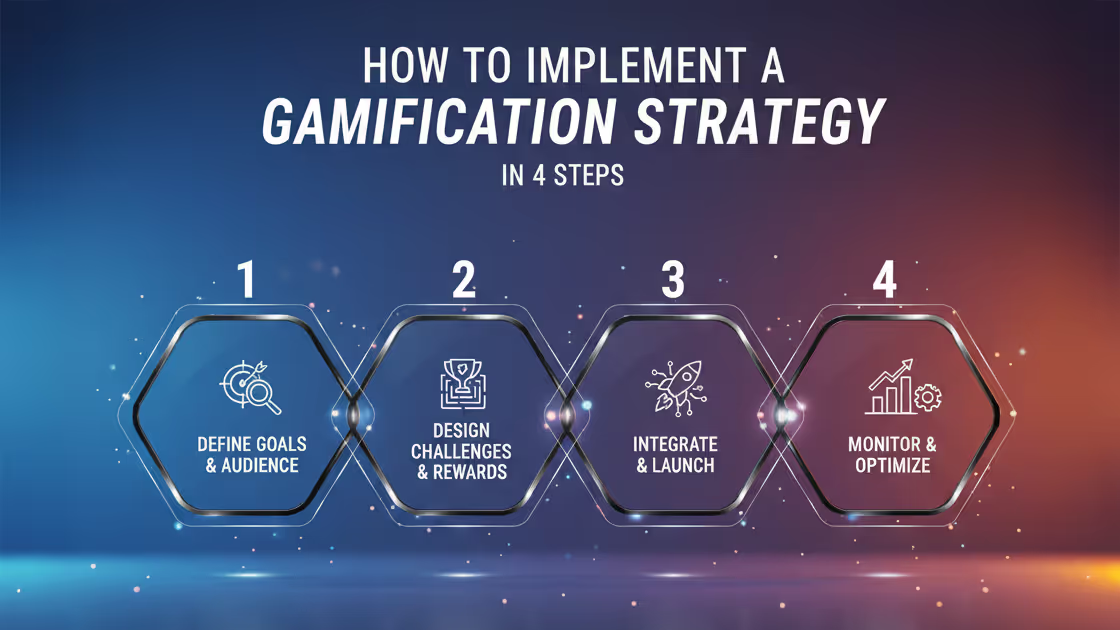
Moving from theory to execution needs a structured approach. These four steps give you a practical framework for rolling out or upgrading your gamification strategy.
Step 1: Define Your KPIs and Success Metrics
Gamification without clear goals is just entertainment expense. Before rolling out any mechanics, you need to nail down exactly what business outcomes you're trying to drive.
Primary KPIs should match your business model and current challenges:
For Operators Focused on Acquisition Conversion:
- First-time deposit rate (target: bump from baseline 2-4% to 6-8%)
- Time to first deposit (target: cut from 30-45 days to 15-25 days)
- Registration-to-deposit cost efficiency (target: slash effective CPA by 40-60%)
For Operators Focused on Retention:
- 30-day retention rate (target: boost from 25-35% to 45-60%)
- 90-day retention rate (target: lift from 15-20% to 30-40%)
- Churn rate among depositors (target: drop by 30-50%)
For Operators Focused on Player Value:
- Average customer lifetime value (target: grow by 40-70%)
- Average monthly deposits per active player (target: increase by 20-35%)
- Cross-sell rate for multi-product operators (target: jump by 50-100%)
Secondary KPIs measure engagement quality:
- Daily Active User (DAU) rate
- Average session length
- Game variety (number of unique games played per player)
- Social engagement (players joining tournaments, leaderboards, chat)
Responsible Gambling KPIs keep growth sustainable:
- Percentage of players with self-imposed limits
- Early intervention success rate (players who dial back activity after AI flags concerns)
- Problem gambling indicator frequency
The big mistake operators make is tracking too many metrics. Pick 3-5 primary KPIs that directly connect to revenue and sustainability. These become your North Star metrics that every gamification mechanic is designed to move.
Step 2: Segment Your Players with Data-Driven Precision
Generic gamification fails because different player types respond to different mechanics and incentives. Good segmentation uses behavioral data to group players by psychology and needs, not just by how much they spend.
Core Player Segments:
The Non-Depositor (Conversion Focus)
- What they look like: Registered, verified email, browsed games, never deposited
- Their mindset: Skeptical, risk-averse, needs trust-building and proof of value
- Best mechanics for them: Daily login wheels, free scratch cards, missions that don't need deposits, prediction games
- AI signals to watch: Session frequency, game demo plays, email engagement, time spent browsing
- When they convert: First deposit typically happens after 8-12 positive interactions over 14-21 days
The Casual Player (Retention Focus)
- What they look like: Deposits monthly, moderate session frequency, plays for fun
- Their mindset: These players are potentially losing control and making emotional decisions. They need intervention, not incentives.
Best mechanics for them:
- Reality check notifications every 30-60 minutes
- Cool-down missions that actually reward taking breaks
- Loss-limit trackers that feel like a game, not a restriction
- Self-assessment quizzes with badge rewards for healthy play
AI signals to watch:
- Deposit velocity increases
- Time-of-day anomalies (those late-night binges)
- Reversal of withdrawal requests
- Bet size escalation after losses
Intervention priority: Immediate automated cool-down triggers, removal from aggressive promotional targeting, and human support outreach.
Here's the thing about segmentation: it needs to be dynamic, not static. Players move between segments all the time. Your AI should reassess segments daily based on rolling 7-day and 30-day behavioral windows. Don't lock players into fixed categories based on outdated data.
Step 3: Map Mechanics to KPIs and Player Segments
This is where strategy meets execution. Every gamification mechanic you deploy needs a clear job: move a specific KPI for a specific player segment.
Mapping Framework
Implementation Rules
Don't stack competing mechanics. If you're running a "7-day login streak" mission, don't simultaneously run a "play 3 days this week" mission. They dilute each other's psychological impact.
Sequence your rollout. Launch foundational mechanics first (points, levels, basic missions), then layer in advanced mechanics (tournaments, storylines) after 60-90 days when you have engagement data.
Test before scaling. Run new mechanics with 10-20% of your player base first. Measure impact on your North Star KPIs for 30 days before full deployment.
Balance intrinsic and extrinsic rewards. Don't just throw bonuses at players. Mix tangible rewards (free spins, bonus funds) with intangible ones (badges, leaderboard placement, status recognition).
How it Works in the Real-World
Let's say an operator wants to improve 30-day retention for casual players. They might deploy:
- Daily Spin-the-Wheel (guaranteed small win, drives daily logins)
- Weekly Mission Series (complete 4 missions to unlock bonus tier progress)
- Seasonal Storyline Campaign (12-week narrative with chapter unlocks)
- Loyalty Point Marketplace (spend points on rewards that match player preferences)
This stack hits multiple psychological drivers. You've got habit formation (daily wheel), progression (missions plus tiers), narrative (storyline), and autonomy (marketplace choice). And it all ladders up to the single goal of keeping casuals engaged past 30 days.
Step 4: Choose Your Platform (Build vs. Buy)
You've defined KPIs, segmented players, and mapped mechanics. Now comes the execution question: do you build a custom gamification engine in-house, or do you integrate a third-party platform?
Build In-House
When it makes sense:
- You're a large multi-brand operator with 500K+ active players and deep technical resources
- Your product needs are highly unique and can't be met by existing platforms
- You have 12-18 months and €200K-€500K to invest in development
- You have dedicated engineers, data scientists, and UX designers available long-term
The hidden costs:
- Ongoing maintenance and feature updates (plan for 2-3 FTE engineers permanently)
- AI model training requires significant player data (minimum 100K users for meaningful personalization)
- Compliance updates for each regulated market you operate in
- Integration with every game provider, payment processor, and CRM system you use
Reality check: Most operators who choose "build" underestimate timelines by 2-3x and costs by 40-60%. Unless you're the scale of Bet365 or Flutter, building in-house rarely delivers faster ROI than buying.
Buy a Platform (SaaS Model)
When it makes sense:
- You're a small-to-mid-sized operator (under 500K active players)
- You need to launch gamification in 4-12 weeks, not 12-18 months
- You want proven mechanics that already work, not experimental builds
- Your team is lean and focused on marketing, not engineering
What to look for in a platform:
AI-Driven, Not Rule-Based: The platform should use machine learning to personalize mechanics in real-time based on player behavior, not just static if-then rules you manually configure.
Unified CRM Integration: Gamification shouldn't live in a silo. Your platform must sync with email, SMS, push notifications, and in-app messaging so missions and rewards trigger across all channels.
Pre-Built Mechanics Library: Look for platforms offering 20+ ready-to-deploy mechanics (missions, wheels, tournaments, leaderboards, VIP tiers, marketplaces) so you're not starting from scratch.
Compliance & Responsible Gaming Tools: Built-in features for self-exclusion, loss limits, reality checks, and cool-down periods. Platforms that treat RG as an afterthought create regulatory and ethical risk.
White-Label Customization: The interface should match your brand. Your colors, your logo, your tone. Not look like a generic third-party widget bolted onto your site.
Real-Time Analytics Dashboard: You need to see which mechanics are moving which KPIs, which player segments are responding, and where drop-off is happening. All in real-time, not in weekly reports.
Scalable Pricing: Avoid platforms that charge per-player fees that explode as you grow. Look for tiered pricing that scales with your business size.
Why Your Online Casino Needs Gamification
As you know, the competition in the iGaming industry is hellish, so if you want to stand out, you must deliver immersive out-of-the-box experiences that keep players returning.
By implementing things like leaderboards, challenges, and rewards, you can increase player engagement and lifetime value exponentially.
Platforms like Smartico provide advanced gamification tools that transform user experiences into interactive, rewarding journeys.
Want to see how gamification software can boost your casino’s engagement? Request a demo today!
Key Gamification Trends in iGaming for 2026
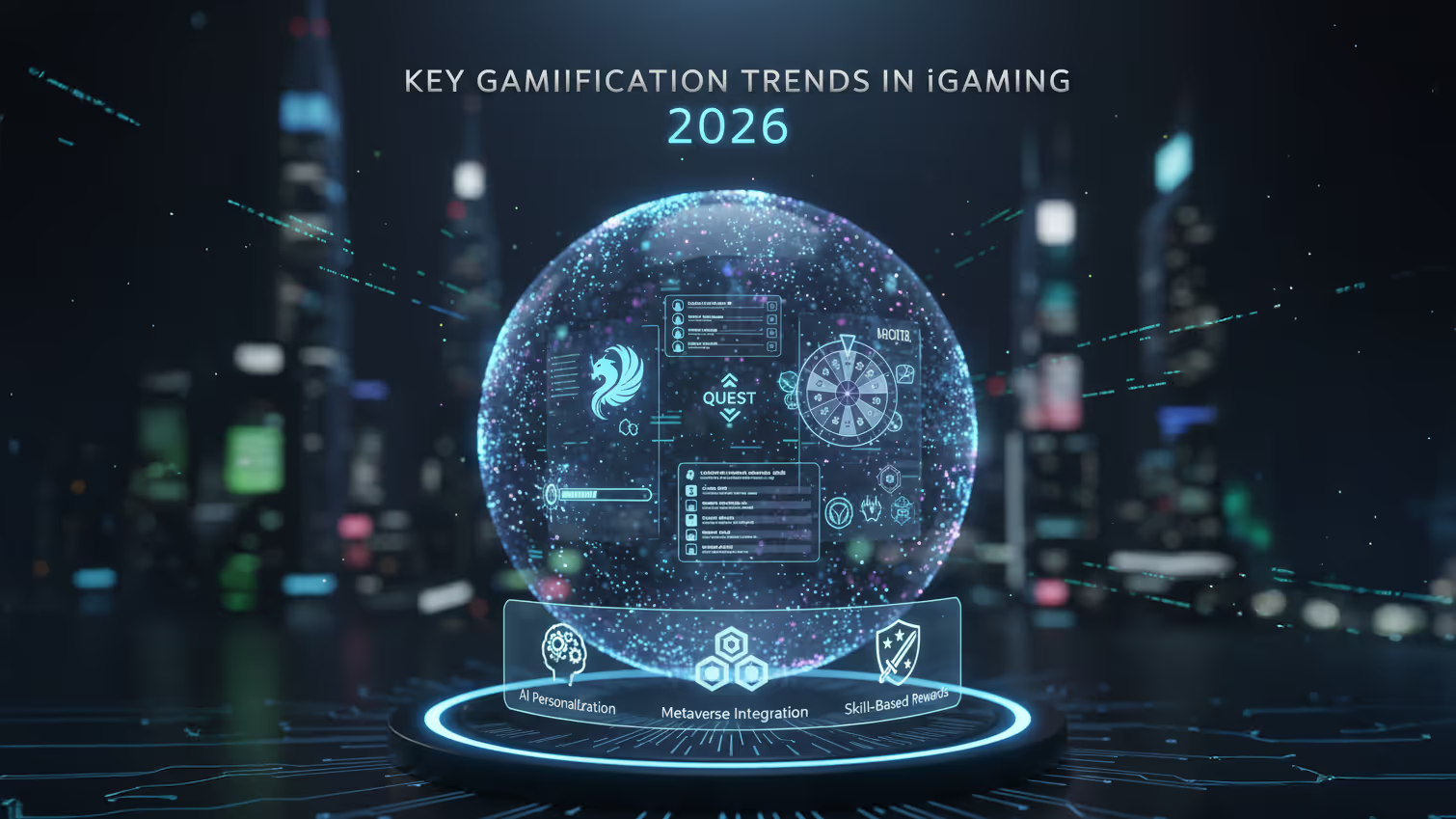
Time flies, and here we are, in the once distant 2026 – a futuristic number worthy of a direct Blade Runner sequel starring Harrison Ford. Yet, flying cars are still a long way off, and we’re still not living in a polluted dystopian nightmare (halfway there though).
But when it comes to Gamification, things seem to be looking pretty promising and futuristic!
Here are some of the most exciting Gamification trends in 2026:
1. AI-Driven Personalized Gaming
Artificial Intelligence is a big game changer when it comes to online casino Gamification. It has the power to accurately analyze player behavior to personalize challenges, promotions, and real-time rewards.
Operators using AI can offer super custom and psychologically potent experiences, bringing both engagement and player loyalty to new heights.
2. Blockchain for Transparency and Fair Play
Blockchain technology ensures fair gaming.
It adds transparency, security, and trust by verifying every gaming transaction on the blockchain ledger.
3. Social Sharing & Community Engagement
Modern players love to share their achievements and compete with friends.
By using social leaderboards, live streaming, and community-driven rewards, online casinos can enhance player retention and word-of-mouth marketing.
Read more about Live Casino Gamification and its impact on community-driven gaming.
4. Mobile-First Gamification
With mobile gaming dominating the industry, gamification needs to be mobile-optimized.
Push notifications, in-app leaderboards, and instant rewards create a fun and breezy mobile gaming experience.
Explore how Online Casino Gamification is evolving for mobile-first players.
5. Responsible Gambling Gamification
Operators must balance engagement with player well-being.
Smart gamification includes:
- Self-exclusion tools
- Loss-limit gamification
- Positive reinforcement techniques
Discover how Gamification Strategies for Casino Operators support responsible gaming.
How Smartico is Transforming iGaming Gamification
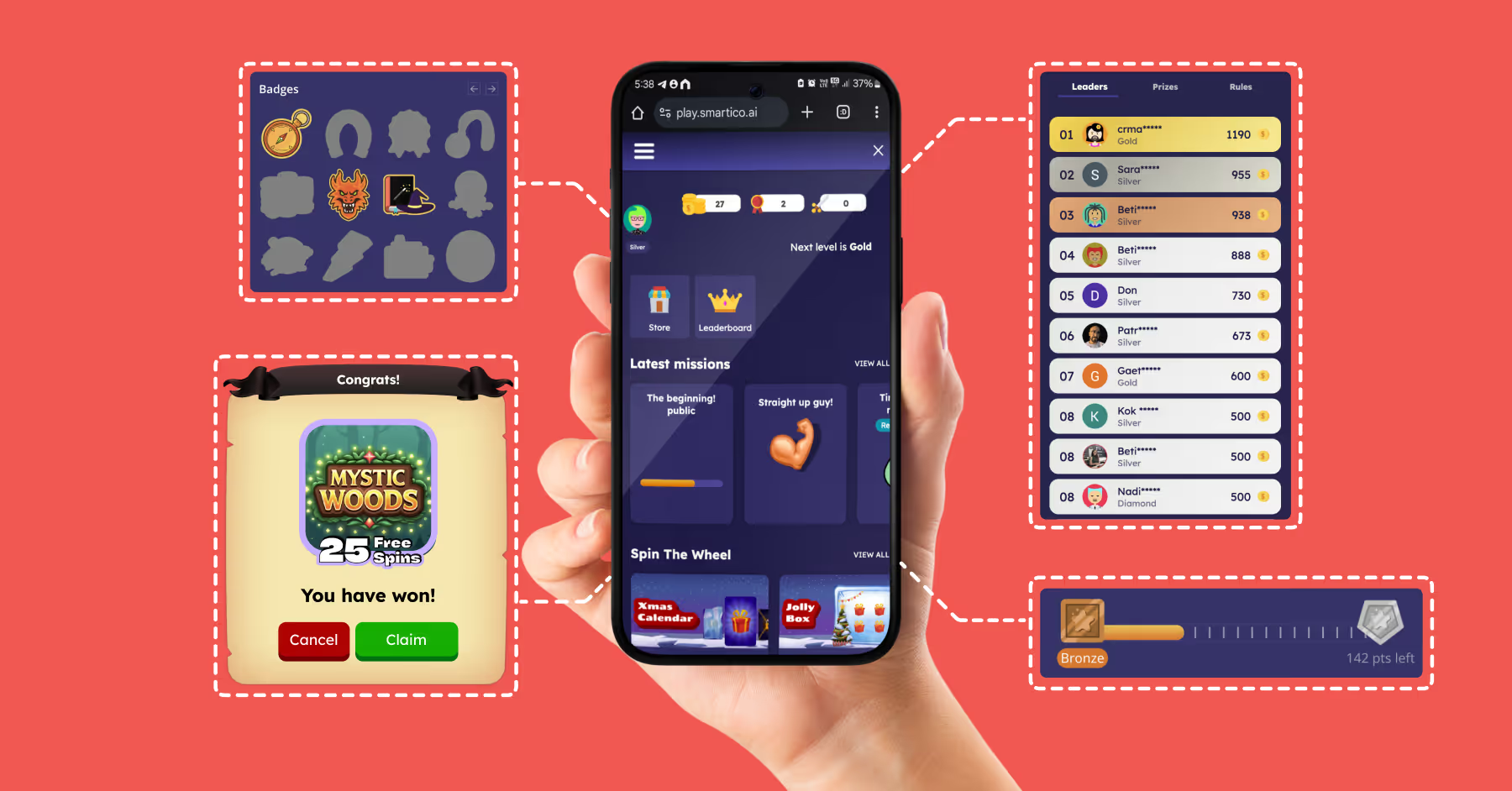
Smartico is the first and leading unified Gamification/CRM Automation platform. It is designed for iGaming operators wanting to push the boundaries of what’s possible and help them overtake their competitors.
Smartico's Advantages
At Smartico, we've developed an all-in-one platform that combines CRM automation, gamification, and engagement tools. Our solution is built to address all your retention needs in real-time.
Key Features:
Our platform offers a range of powerful features:
- CRM Automation: We streamline every step of the player journey, from onboarding to loyalty, with hyper-personalized messaging and automated workflows.
- Gamification: Our customizable gamification tools bring fun, rewards, and loyalty seamlessly integrated within your CRM.
- Free-to-Play Games: We offer a suite of customizable mini-games like the Loyalty Wheel, Scratch cards, and Daily Loot Boxes to boost player engagement.
- Bonus Engine: Our system helps lower bonus costs with rewards tailored to player behavior, manageable in real-time or scheduled for optimal impact.
- Jackpots: We provide customizable jackpots, both player-funded and operator-funded, to enhance any game from any provider.
- AI Models: Our AI turns player data into actionable predictions, helping optimize engagement, prevent churn, and deliver rewards at the perfect moment.
Integration and Support
One of Smartico’s key strengths is its effortless integration process. Our engineers manage the entire integration, reducing the load on your R&D resources. We support all major SMS, email, and instant messaging providers, and integrate with all iGaming platforms.
Expertise and Partnership
We're more than just a software provider; we're a partner invested in your growth. Our team works alongside you to build CRM expertise within your team, guiding strategy and offering practical tips and precious insights throughout our partnership.
Pricing and Availability
Our pricing is based on monthly active users and includes both CRM automation and gamification, along with a dedicated Success Manager. While we don't offer a trial version, we're happy to provide a free in-depth demo to show you exactly how Smartico works.
At Smartico, we're committed to helping iGaming businesses improve retention and engagement. We'd love to show you how our platform can benefit your operations. Feel free to book a demo or reach out with any questions you might have.
How Smartico Solves the Build vs. Buy Dilemma
Smartico delivers everything a custom build would take 18 months to create, but launches in 4-8 weeks:
- AI-Driven Personalization Engine: Real-time player segmentation using behavioral data, predictive churn modeling, and dynamic mechanic assignment
- 20+ Pre-Built Mechanics: Missions, spin-the-wheel, tournaments, leaderboards, VIP tiers, points, badges, marketplace, and seasonal campaigns (all customizable)
- Omnichannel CRM Automation: Unified messaging across email, SMS, push, and in-app triggered by gamification events
- Responsible Gambling Suite: Built-in tools for loss limits, self-exclusion, cool-down rewards, and AI-powered early intervention
- Plug-and-Play Integration: Works with 100+ game providers, payment processors, and existing CRM systems
- Real-Time Analytics: Live dashboards showing KPI movement, segment performance, and mechanic effectiveness
The result? Operators go from zero to fully-functional gamification in 30-60 days, see measurable KPI improvements within 90 days, and avoid the €200K-€500K upfront cost of building in-house.
Final Decision Framework
Ask yourself three questions:
- Do we have 12-18 months to wait for results? If no, buy.
- Do we have €200K-€500K in capital and 3-5 engineers available long-term? If no, buy.
- Are our gamification needs so unique that no existing platform can serve them? If no, buy.
For 95% of iGaming operators, the answer is buy a platform. The 5% who should build are enterprise-scale operators with massive player bases, unique regulatory environments, or highly specialized product needs.
The competitive advantage in 2025 isn't who has the fanciest custom-built gamification engine. It's who implements proven mechanics faster, measures results accurately, and iterates based on data. Speed and execution beat perfection and delays every time.
Next Steps After Implementation
Once your gamification strategy is live, the work isn't done. Plan for:
30-Day Check-In: Review early KPI movement, identify underperforming mechanics, gather player feedback
60-Day Optimization: A/B test variations of top mechanics, adjust reward values, refine player segmentation
90-Day Strategy Review: Evaluate ROI, plan next-phase rollout (new mechanics, seasonal campaigns, cross-brand integration)
Quarterly Deep Dive: Update AI models with fresh data, refresh creative assets, align with new business priorities
{{cta-banner}}
How Gamification Boosts Player Lifetime Value
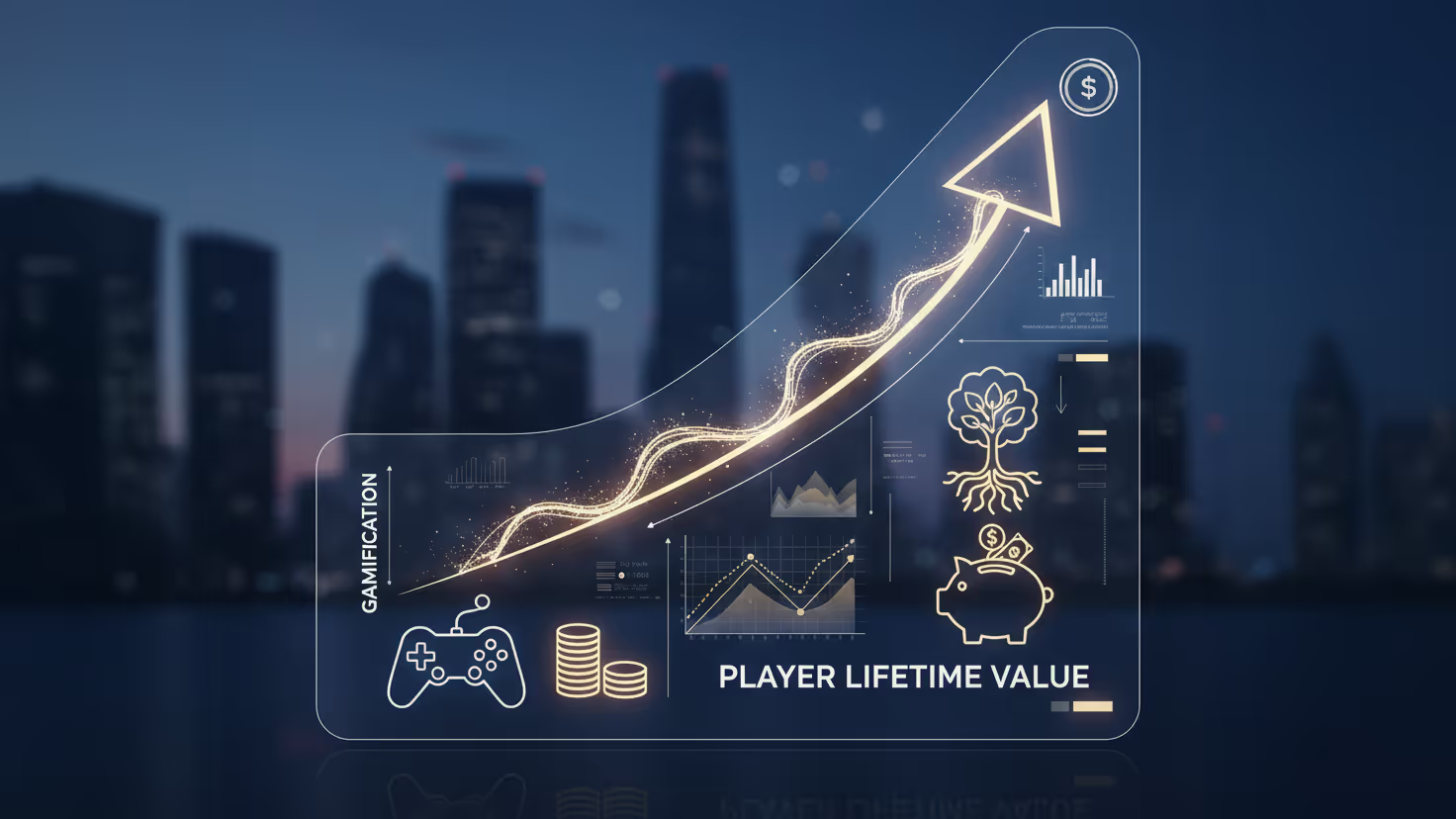
A well-executed gamification strategy increases Player Lifetime Value (CLV).
Here’s how:
- More playtime: Players stay engaged with missions and challenges.
- Higher deposits: Reward systems encourage higher betting activity.
- Stronger loyalty: VIP programs create exclusive player experiences.
Check out our in-depth guide on Gamification and Player Lifetime Value.
News from 2026: The Evolution of iGaming Gamification
As we look at the world of iGaming in 2026, several groundbreaking developments have emerged:
- Virtual Reality Casinos: Fully immersive VR experiences have become mainstream, offering players the ability to walk through virtual casino floors and interact with games and other players in a 3D environment.
- Augmented Reality Sports Betting: AR overlays during live sports events provide real-time odds and betting opportunities, enhancing the second-screen experience for sports bettors.
- Neurogaming Integration: Early adoption of brain-computer interfaces allows players to control certain game elements with their thoughts, adding a new dimension to skill-based casino games.
- Eco-Gamification: iGaming operators have introduced sustainability-focused gamification elements, rewarding players for eco-friendly actions both in-game and in real life.
FAQ
1. How has AI improved personalization in online casinos?
AI now offers hyper-personalized gaming experiences, predicting player preferences and adapting game difficulty in real-time for optimal engagement.
2. What role does blockchain play in iGaming gamification?
Blockchain ensures provably fair gaming, transparent transactions, and extra security, building trust among players.
3. How are mobile-first strategies shaping iGaming gamification?
Mobile-optimized features like push notifications, in-app leaderboards, and instant rewards create seamless on-the-go gaming experiences.
4. What new technologies are emerging in iGaming gamification?
Virtual Reality casinos, Augmented Reality sports betting, and early neurogaming integrations are at the forefront of iGaming innovation in 2026.
Player Behavior & Psychology
5. How does gamification support responsible gambling?
Gamification techniques are being used to encourage responsible play through self-exclusion tools, loss-limit features, and positive reinforcement for healthy gaming habits.
6. What's the difference between gamification and a loyalty program?
Loyalty programs reward spending (transactional), while gamification rewards engagement and progression (behavioral). Gamification creates psychological investment; loyalty programs create monetary incentive.
7. Why do some players respond to gamification better than others?
Player type varies: Achievers chase goals and progression, Explorers enjoy variety and discovery, Socializers value community and competition, and Killers seek dominance. Effective gamification caters to multiple types simultaneously.
8. Can gamification actually help reduce problem gambling?
Yes, when designed ethically. Gamified loss-limit tools, cool-down periods, reality check reminders, and self-exclusion interfaces increase adoption rates compared to plain text warnings.
Implementation & Strategy
9. How long does it take to implement gamification?
Basic gamification (missions, points, badges) takes 4–8 weeks. Advanced systems (AI-driven personalization, cross-platform integration) take 3–6 months. Results typically appear within 60–90 days.
10. What are the most common gamification implementation mistakes?
Over-rewarding (creating bonus-chasers, not engaged players), poor mobile design, ignoring player segmentation, and bolting on gamification without aligning to core KPIs.
11. How do you measure gamification ROI?
Track four core metrics: Retention Rate (30/60/90-day), Player Lifetime Value (LTV), Cost Per Acquisition (CPA), and Session Duration. Compare cohorts before/after implementation. ROI typically shows 20–50% improvement within 6 months.
12. What's the minimum investment needed to implement gamification?
Basic gamification starts at €15,000–€25,000 for smaller operators using modular solutions. Enterprise-level AI-driven systems run €100,000+. Many platform providers (including Smartico) offer scalable pricing.
Business & Operations
13. Is gamification legal in regulated iGaming markets?
Yes, gamification mechanics (missions, leaderboards, badges) are legal across regulated markets. However, ensure compliance with bonus regulations, no false claims about odds, and transparent prize mechanics. Always verify with local gaming authorities.
14. How much does gamification implementation cost?
Costs vary: SaaS platforms charge €500–€3,000/month depending on features; custom builds cost €50,000–€250,000 upfront. ROI typically breaks even within 6–12 months through improved retention and LTV.
15. What's the difference between gamification and the actual gambling product?
Gamification enhances motivation and engagement around the core product (slots, tables, sports betting). It doesn't replace the games themselves—it creates reasons to play them more often and stay longer.
Optimize Your iGaming Platform with Smartico
Gamification is the future of iGaming marketing and we’re here to guide you into it.
From leaderboards to AI-driven personalization, Smartico helps operators optimize their online casino / sports betting / gambling sites experience.
Explore our Gamification Software or Book a Free Demo to see it in action!
Related Articles & Resources
- Casino Gamification: The Ultimate Guide
- Self-Determination Theory in iGaming: How Autonomy, Achievement, and Connection Drive Player Retention
- How to Improve User Experience with Gamification
- Gamification in Land-Based Casinos
- Data-Driven Gamification in Online Casinos
Stay ahead of the game with Smartico’s iGaming Blog!
Ready to take your online casino to the next level?
Request a Demo today!
Final Words
Gamification isn't optional anymore, but the market baseline. AI-driven personalization, strategic mechanics, and responsible gambling tools drive 30–50% retention gains and 40–70% LTV increases. The operators leading their markets aren't moving faster; they're starting smarter. So why not give yourself a shortcut? Smartico combines all three in one platform. Request your demo today. For a short introduction of Smartico, you can also check out the video below.
{{cta-banner}}